Human beings have long been defined as social, political, rational, or economic beings. However, a more recent perspective identifies them as "storytelling animals". Storytelling is not merely a form of entertainment - it plays a crucial epistemological role by offering a unique way to understand the world. Stories help both children and adults make inferences, organize knowledge, and comprehend complex social dynamics.
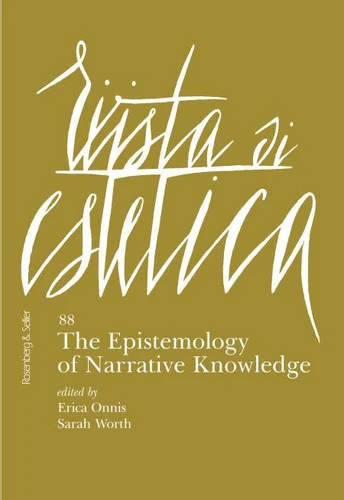
This issue of Rivista di Estetica is devoted to the epistemology of narrative knowledge, which explores how knowledge is produced, structured, and evaluated through stories. Unlike objective knowledge, narrative knowledge reflects personal beliefs, assumptions, experiences, and desires. It is perspectival - shaped by individuals or communities - and participative, often influencing worldviews in subtle and sometimes oppressive ways.
Stories intertwine to form complex narrative clusters that shape human understanding of the world. By studying these dynamics, we can better grasp their influence on how we perceive and engage with reality.
Human beings have long been defined as social, political, rational, or economic beings. However, a more recent perspective identifies them as "storytelling animals". Storytelling is not merely a form of entertainment - it plays a crucial epistemological role by offering a unique way to understand the world. Stories help both children and adults make inferences, organize knowledge, and comprehend complex social dynamics.
This issue of Rivista di Estetica is devoted to the epistemology of narrative knowledge, which explores how knowledge is produced, structured, and evaluated through stories. Unlike objective knowledge, narrative knowledge reflects personal beliefs, assumptions, experiences, and desires. It is perspectival - shaped by individuals or communities - and participative, often influencing worldviews in subtle and sometimes oppressive ways.
Stories intertwine to form complex narrative clusters that shape human understanding of the world. By studying these dynamics, we can better grasp their influence on how we perceive and engage with reality.


 , qui est-ce ?