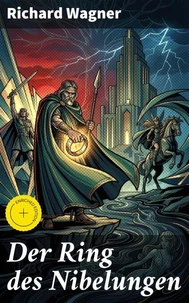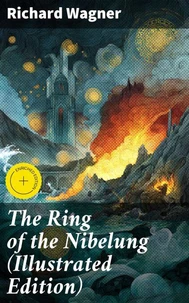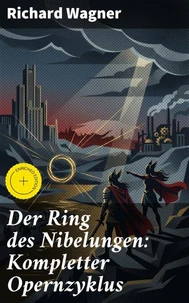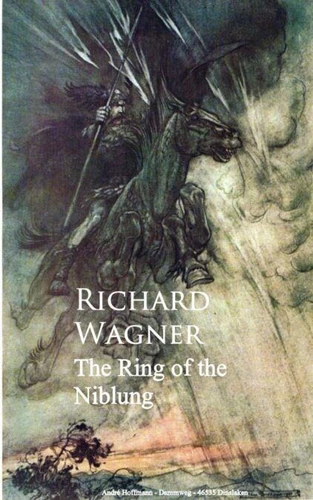
Ring of the Niblung
Par :Formats :
Disponible dans votre compte client Decitre ou Furet du Nord dès validation de votre commande. Le format ePub est :
- Compatible avec une lecture sur My Vivlio (smartphone, tablette, ordinateur)
- Compatible avec une lecture sur liseuses Vivlio
- Pour les liseuses autres que Vivlio, vous devez utiliser le logiciel Adobe Digital Edition. Non compatible avec la lecture sur les liseuses Kindle, Remarkable et Sony
 , qui est-ce ?
Notre partenaire de plateforme de lecture numérique où vous retrouverez l'ensemble de vos ebooks gratuitement
Pour en savoir plus sur nos ebooks, consultez notre aide en ligne ici
C'est si simple ! Lisez votre ebook avec l'app Vivlio sur votre tablette, mobile ou ordinateur :

- Nombre de pages500
- FormatePub
- ISBN978-3-7364-0703-9
- EAN9783736407039
- Date de parution17/08/2016
- Protection num.Digital Watermarking
- Taille9 Mo
- Infos supplémentairesepub
- ÉditeurAndhof
Résumé
This book is a commentary on The Ring of the Niblungs, Wagner's chief work. I offer it to those enthusiastic admirers of Wagner who are unable to follow his ideas, and do not in the least understand the dilemma of Wotan, though they are filled with indignation at the irreverence of the Philistines who frankly avow that they find the remarks of the god too often tedious and nonsensical. Now to be devoted to Wagner merely as a dog is devoted to his master, sharing a few elementary ideas, appetites and emotions with him, and, for the rest, reverencing his superiority without understanding it, is no true Wagnerism.
Yet nothing better is possible without a stock of ideas common to master and disciple. Unfortunately, the ideas of the revolutionary Wagner of 1848 are taught neither by the education nor the experience of English and American gentlemen-amateurs, who are almost always political mugwumps, and hardly ever associate with revolutionists. The earlier attempts to translate his numerous pamphlets and essays into English, resulted in ludicrous mixtures of pure nonsense with the absurdest distorsions of his ideas into the ideas of the translators.
We now have a translation which is a masterpiece of interpretation and an eminent addition to our literature; but that is not because its author, Mr. Ashton Ellis, knows the German dictionary better than his predecessors. He is simply in possession of Wagner's ideas, which were to them inconceivable. All I pretend to do in this book is to impart the ideas which are most likely to be lacking in the conventional Englishman's equipment.
I came by them myself much as Wagner did, having learnt more about music than about anything else in my youth, and sown my political wild oats subsequently in the revolutionary school.
Yet nothing better is possible without a stock of ideas common to master and disciple. Unfortunately, the ideas of the revolutionary Wagner of 1848 are taught neither by the education nor the experience of English and American gentlemen-amateurs, who are almost always political mugwumps, and hardly ever associate with revolutionists. The earlier attempts to translate his numerous pamphlets and essays into English, resulted in ludicrous mixtures of pure nonsense with the absurdest distorsions of his ideas into the ideas of the translators.
We now have a translation which is a masterpiece of interpretation and an eminent addition to our literature; but that is not because its author, Mr. Ashton Ellis, knows the German dictionary better than his predecessors. He is simply in possession of Wagner's ideas, which were to them inconceivable. All I pretend to do in this book is to impart the ideas which are most likely to be lacking in the conventional Englishman's equipment.
I came by them myself much as Wagner did, having learnt more about music than about anything else in my youth, and sown my political wild oats subsequently in the revolutionary school.