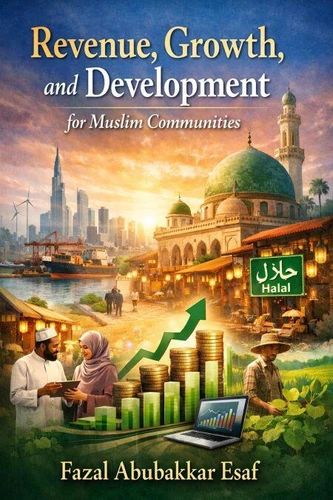
Muslim communities-like all societies-possess vast, untapped economic and human potential. However, structural challenges such as fragmented governance, underutilized assets, and shifting global economic pressures often limit progress. This book addresses these challenges through a structured, multi-level approach: National-Level Strategies: Trade policy, energy development, innovation ecosystems, and taxation frameworks State-Level Strategies: Industrial clusters, education systems, healthcare infrastructure, and public-private partnerships City-Level Strategies: Urban planning, smart infrastructure, creative economies, and municipal revenue systems Neighborhood-Level Strategies: Micro-entrepreneurship, cultural enterprises, local skills development, and cooperative models By integrating policy, business, technology, and cultural values, this work presents a holistic 360-degree framework for building thriving, resilient, and prosperous communities.
Muslim communities-like all societies-possess vast, untapped economic and human potential. However, structural challenges such as fragmented governance, underutilized assets, and shifting global economic pressures often limit progress. This book addresses these challenges through a structured, multi-level approach: National-Level Strategies: Trade policy, energy development, innovation ecosystems, and taxation frameworks State-Level Strategies: Industrial clusters, education systems, healthcare infrastructure, and public-private partnerships City-Level Strategies: Urban planning, smart infrastructure, creative economies, and municipal revenue systems Neighborhood-Level Strategies: Micro-entrepreneurship, cultural enterprises, local skills development, and cooperative models By integrating policy, business, technology, and cultural values, this work presents a holistic 360-degree framework for building thriving, resilient, and prosperous communities.


 , qui est-ce ?