SOLDES
Jusqu'à -70% sur une sélection d'articles*

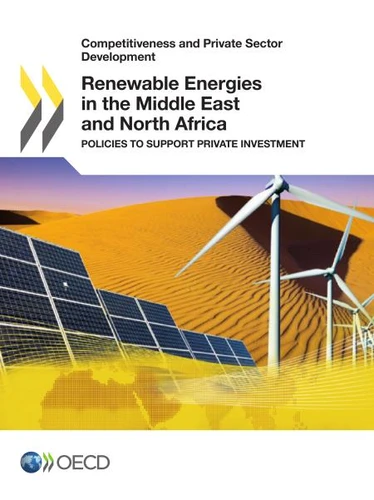
Renewable energies in the middle east and north africa
Par :Formats :
Disponible dans votre compte client Decitre ou Furet du Nord dès validation de votre commande. Le format PDF est :
- Compatible avec une lecture sur My Vivlio (smartphone, tablette, ordinateur)
- Compatible avec une lecture sur liseuses Vivlio
- Pour les liseuses autres que Vivlio, vous devez utiliser le logiciel Adobe Digital Edition. Non compatible avec la lecture sur les liseuses Kindle, Remarkable et Sony
 , qui est-ce ?
Notre partenaire de plateforme de lecture numérique où vous retrouverez l'ensemble de vos ebooks gratuitement
Pour en savoir plus sur nos ebooks, consultez notre aide en ligne ici
C'est si simple ! Lisez votre ebook avec l'app Vivlio sur votre tablette, mobile ou ordinateur :

- Nombre de pages132
- FormatPDF
- ISBN978-92-64-18370-4
- EAN9789264183704
- Date de parution20/03/2013
- Protection num.Digital Watermarking
- Taille3 Mo
- Infos supplémentairespdf
- ÉditeurOECD
Résumé
The combined effects of the economic crisis and the recent popular uprisings in parts of the Middle East and North Africa have brought social and economic challenges back to the centre of attention of policy makers. For governments searching to create jobs, to satisfy the growing energy demand of their populations and to diversify their economies, the appeal of renewable energies is strong. However, the right policy framework and support need to be put in place if the region wants to attract private investment in the sector and reap the benefits of its favourable resource endowment, especially as regards solar and wind energy.
This report makes the case for a stronger deployment of renewables in the Middle East and North Africa and identifies the appropriate support policies required to stimulate the necessary private investment. An assessment of existing policy frameworks in the region and examples from OECD good practice are used as pointers to help guide policy makers in their choices. The analysis contained in this report suggests that support policies targeting the life cycle of renewable energy projects such as feed-in tariffs and power purchase agreements are more effective and less distortive than policies subsidising the initial investment, such as cost reductions.
The optimal incentive scheme provides investors with stability through a guaranteed but declining minimum return while imposing enough market risk to foster technological progress.
This report makes the case for a stronger deployment of renewables in the Middle East and North Africa and identifies the appropriate support policies required to stimulate the necessary private investment. An assessment of existing policy frameworks in the region and examples from OECD good practice are used as pointers to help guide policy makers in their choices. The analysis contained in this report suggests that support policies targeting the life cycle of renewable energy projects such as feed-in tariffs and power purchase agreements are more effective and less distortive than policies subsidising the initial investment, such as cost reductions.
The optimal incentive scheme provides investors with stability through a guaranteed but declining minimum return while imposing enough market risk to foster technological progress.
A propos de OCDE


32,99 €

72,99 €

33,99 €

32,99 €
32,99 €

32,00 €

Tax compilance by design
E-book
16,00 €

16,00 €

19,00 €

16,00 €

25,00 €


23,00 €

Women in business 2014
E-book
31,00 €

