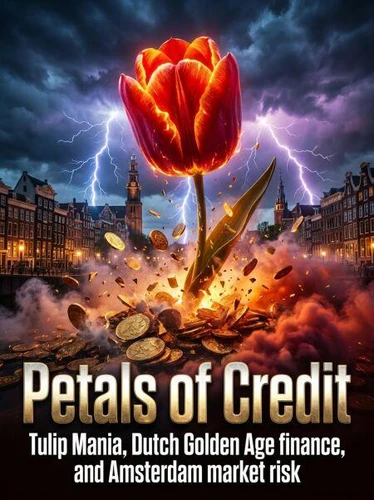
Petals of Credit. Tulip Mania, Dutch Golden Age finance, and Amsterdam market risk
Par :Formats :
Disponible dans votre compte client Decitre ou Furet du Nord dès validation de votre commande. Le format ePub est :
- Compatible avec une lecture sur My Vivlio (smartphone, tablette, ordinateur)
- Compatible avec une lecture sur liseuses Vivlio
- Pour les liseuses autres que Vivlio, vous devez utiliser le logiciel Adobe Digital Edition. Non compatible avec la lecture sur les liseuses Kindle, Remarkable et Sony
 , qui est-ce ?
Notre partenaire de plateforme de lecture numérique où vous retrouverez l'ensemble de vos ebooks gratuitement
Pour en savoir plus sur nos ebooks, consultez notre aide en ligne ici
C'est si simple ! Lisez votre ebook avec l'app Vivlio sur votre tablette, mobile ou ordinateur :

- Nombre de pages178
- FormatePub
- ISBN978-3-565-46486-9
- EAN9783565464869
- Date de parution28/05/2026
- Protection num.pas de protection
- Taille994 Ko
- Infos supplémentairesepub
- ÉditeurEmphaloz Publishing House
Résumé
Tulip Mania began as beauty priced like certainty, then exposed how Dutch Golden Age finance could turn trust into danger. In 1637, bulbs were not merely flowers; they became promises, reputations, and imagined futures traded before spring had even arrived.
Petals of Credit follows the social machinery behind the famous Dutch tulip bubble without reducing it to simple greed. It examines informal contracts, tavern auctions, merchant confidence, and the fragile authority of Amsterdam market culture.
Prices rose because value was no longer tied only to rarity, but to belief shared by buyers, brokers, growers, and spectators. When confidence failed, the crisis became less a national ruin than a moral and legal rupture over obligation. Set within early modern European capitalism, this book treats Tulip Mania as a warning about credit before modern regulation. Its importance lies not in catastrophe, but in the moment a flower revealed how markets depend on imagination, trust, and fear.
Prices rose because value was no longer tied only to rarity, but to belief shared by buyers, brokers, growers, and spectators. When confidence failed, the crisis became less a national ruin than a moral and legal rupture over obligation. Set within early modern European capitalism, this book treats Tulip Mania as a warning about credit before modern regulation. Its importance lies not in catastrophe, but in the moment a flower revealed how markets depend on imagination, trust, and fear.