
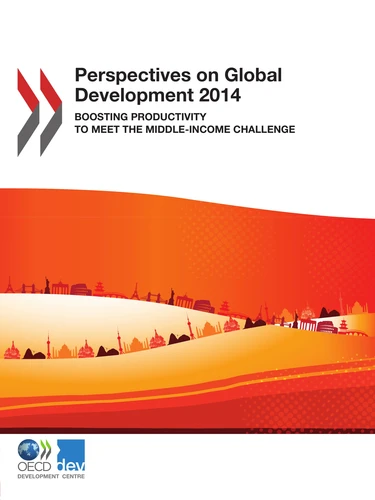
Perspectives on Global Development 2014. Boosting Productivity to Meet the Middle-Income Challenge
Par :Formats :
Disponible dans votre compte client Decitre ou Furet du Nord dès validation de votre commande. Le format PDF est :
- Compatible avec une lecture sur My Vivlio (smartphone, tablette, ordinateur)
- Compatible avec une lecture sur liseuses Vivlio
- Pour les liseuses autres que Vivlio, vous devez utiliser le logiciel Adobe Digital Edition. Non compatible avec la lecture sur les liseuses Kindle, Remarkable et Sony
 , qui est-ce ?
Notre partenaire de plateforme de lecture numérique où vous retrouverez l'ensemble de vos ebooks gratuitement
Pour en savoir plus sur nos ebooks, consultez notre aide en ligne ici
C'est si simple ! Lisez votre ebook avec l'app Vivlio sur votre tablette, mobile ou ordinateur :

- Nombre de pages288
- FormatPDF
- ISBN978-92-64-21061-5
- EAN9789264210615
- Date de parution02/07/2014
- Protection num.Digital Watermarking
- Taille4 Mo
- Infos supplémentairespdf
- ÉditeurOECD
Résumé
Developing economies continue to grow faster than more advanced countries. Non-OECD countries' share in world GDP surpassed that of OECD countries in 2010. Since its first edition in 2010, the annual Perspectives on Global Development has investigated the trends in "shifting wealth", the increasing economic weight of developing countries in the world economy. "Shifting wealth" has received a boost through the rise of China, which has also led to positive spillover effects on developing economies that supply China's demand for resource-based products and intermediates.
However, even at their higher rates of growth since 2000, the per capita incomes in developing countries - including many middle-income countries - will not reach the levels of developed countries by 2050. Boosting productivity growth in middle-income countries could stem this trend and is the focus of this report. At the same time, this growth needs to be inclusive so a real convergence in living standards can take place.
However, even at their higher rates of growth since 2000, the per capita incomes in developing countries - including many middle-income countries - will not reach the levels of developed countries by 2050. Boosting productivity growth in middle-income countries could stem this trend and is the focus of this report. At the same time, this growth needs to be inclusive so a real convergence in living standards can take place.
A propos de OCDE


32,99 €

72,99 €

33,99 €

32,99 €

32,99 €

32,00 €

25,00 €

Tax compilance by design
E-book
16,00 €

16,00 €

19,00 €

16,00 €


23,00 €

Women in business 2014
E-book
31,00 €



27,00 €