
Prof. Dr. Matthias Becher studierte Geschichte und Politische Wissenschaften in Konstanz und ist seit 1998 Professor für Mittelalterliche und Neuere Geschichte an der Universität Bonn. Von 2016 bis 2021 war er Sprecher des Sonderforschungsbereichs 1167, seither leitet er das Bonner Zentrum >Macht und Herrschaft<.
Prof. Dr. Karoline Noack lehrt Altamerikanistik und Ethnologie an der Universität Bonn.
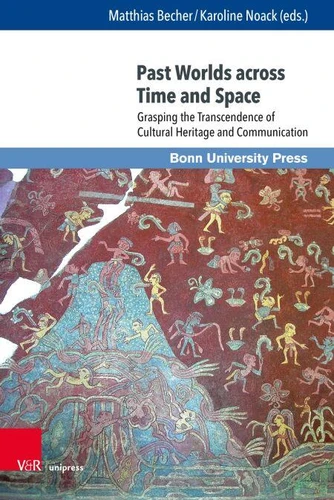
Past Worlds across Time and Space. Grasping the Transcendence of Cultural Heritage and Communication
Par : ,Formats :
Disponible dans votre compte client Decitre ou Furet du Nord dès validation de votre commande. Le format PDF est :
- Compatible avec une lecture sur My Vivlio (smartphone, tablette, ordinateur)
- Compatible avec une lecture sur liseuses Vivlio
- Pour les liseuses autres que Vivlio, vous devez utiliser le logiciel Adobe Digital Edition. Non compatible avec la lecture sur les liseuses Kindle, Remarkable et Sony
 , qui est-ce ?
Notre partenaire de plateforme de lecture numérique où vous retrouverez l'ensemble de vos ebooks gratuitement
Pour en savoir plus sur nos ebooks, consultez notre aide en ligne ici
C'est si simple ! Lisez votre ebook avec l'app Vivlio sur votre tablette, mobile ou ordinateur :

- Nombre de pages194
- FormatPDF
- ISBN978-3-8470-1938-1
- EAN9783847019381
- Date de parution15/06/2026
- Protection num.pas de protection
- Taille12 Mo
- Infos supplémentairespdf
- ÉditeurV&R Unipress
Résumé
This volume examines two main topics of the Transdisciplinary Research Area (TRA) "Past Worlds and Modern Questions - Cultures across Time and Space" at the University of Bonn: cultural intangible heritage and communication. The authors focus on the interrelations of these topics by analyzing past cultural, political, social, and economic constellations from broad geographical and historical perspectives.
The contributions aim to overcome the canonical timeline anchored in Eurocentric history, affecting two areas of investigation in particular: Museum studies, which has been transformed in recent decades by new ways of thinking about and doing museum work, as well as concepts of understanding communication as a historical process of transfer that occurred during the so-called premodern age.
The contributions aim to overcome the canonical timeline anchored in Eurocentric history, affecting two areas of investigation in particular: Museum studies, which has been transformed in recent decades by new ways of thinking about and doing museum work, as well as concepts of understanding communication as a historical process of transfer that occurred during the so-called premodern age.
A propos de Matthias Becher

55,00 €
90,00 €