SOLDES
Jusqu'à -70% sur une sélection d'articles*

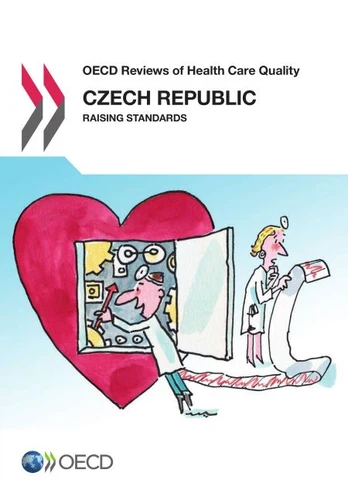
OECD Reviews of Health Care Quality : Czech Republic 2014
Par :Formats :
Disponible dans votre compte client Decitre ou Furet du Nord dès validation de votre commande. Le format PDF est :
- Compatible avec une lecture sur My Vivlio (smartphone, tablette, ordinateur)
- Compatible avec une lecture sur liseuses Vivlio
- Pour les liseuses autres que Vivlio, vous devez utiliser le logiciel Adobe Digital Edition. Non compatible avec la lecture sur les liseuses Kindle, Remarkable et Sony
 , qui est-ce ?
Notre partenaire de plateforme de lecture numérique où vous retrouverez l'ensemble de vos ebooks gratuitement
Pour en savoir plus sur nos ebooks, consultez notre aide en ligne ici
C'est si simple ! Lisez votre ebook avec l'app Vivlio sur votre tablette, mobile ou ordinateur :

- Nombre de pages160
- FormatPDF
- ISBN978-92-64-20860-5
- EAN9789264208605
- Date de parution25/06/2014
- Protection num.Digital Watermarking
- Taille3 Mo
- Infos supplémentairespdf
- ÉditeurOECD
Résumé
This book presents a comprehensive review of health care quality in the Czech Republic. It finds that over the past 20 years, the Czech Republic witnessed the unprecedented gains in quality of health care and life expectancy and successfully transferred its Semaschko system into the modern accessible health care system with private-public mix of providers. Nevertheless the health care system in the Czech Republic still has some way to go to achieve the outcomes of the best performing OECD members.
While some of the gap might be caused by the one of the lowest levels of health care expenditures among OECD countries (7.2% GDP in 2011) there are possibilities to improve the outcomes without incurring much of the additional costs. The Czech authorities should reach a consensus on the development of quality of care and data infrastructure and aim for sustainable long-term initiatives undisturbed by the political cycles in both of these areas.
While the adverse events reporting and voluntary accreditation are the good steps towards the accountability of the providers, the government should do more in this area, undertake the effort to broaden the accreditation process and include outpatient care and link public health authorities to the quality agenda of inpatient care. In the area of data infrastructure more data should be gathered, the process of data gathering should be streamlined and administrative burden for the providers lowered primarily via the merging the data-collecting agencies.
Finally, without the active participation of health insurance funds and proper reimbursement mechanisms in place the quality agenda will not be perceived as the priority.
While some of the gap might be caused by the one of the lowest levels of health care expenditures among OECD countries (7.2% GDP in 2011) there are possibilities to improve the outcomes without incurring much of the additional costs. The Czech authorities should reach a consensus on the development of quality of care and data infrastructure and aim for sustainable long-term initiatives undisturbed by the political cycles in both of these areas.
While the adverse events reporting and voluntary accreditation are the good steps towards the accountability of the providers, the government should do more in this area, undertake the effort to broaden the accreditation process and include outpatient care and link public health authorities to the quality agenda of inpatient care. In the area of data infrastructure more data should be gathered, the process of data gathering should be streamlined and administrative burden for the providers lowered primarily via the merging the data-collecting agencies.
Finally, without the active participation of health insurance funds and proper reimbursement mechanisms in place the quality agenda will not be perceived as the priority.
A propos de OCDE


32,99 €

72,99 €

33,99 €


32,99 €
32,99 €

32,00 €

Tax compilance by design
E-book
16,00 €

16,00 €

19,00 €

16,00 €

25,00 €


23,00 €

Women in business 2014
E-book
31,00 €

