Nouveauté
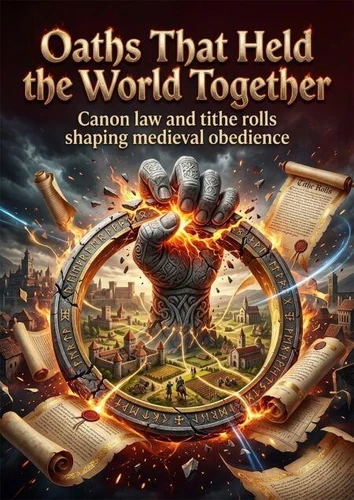
Oaths That Held the World Together. Canon law and tithe rolls shaping medieval obedience
Par :Formats :
Disponible dans votre compte client Decitre ou Furet du Nord dès validation de votre commande. Le format ePub est :
- Compatible avec une lecture sur My Vivlio (smartphone, tablette, ordinateur)
- Compatible avec une lecture sur liseuses Vivlio
- Pour les liseuses autres que Vivlio, vous devez utiliser le logiciel Adobe Digital Edition. Non compatible avec la lecture sur les liseuses Kindle, Remarkable et Sony
 , qui est-ce ?
Notre partenaire de plateforme de lecture numérique où vous retrouverez l'ensemble de vos ebooks gratuitement
Pour en savoir plus sur nos ebooks, consultez notre aide en ligne ici
C'est si simple ! Lisez votre ebook avec l'app Vivlio sur votre tablette, mobile ou ordinateur :

- Nombre de pages150
- FormatePub
- ISBN978-3-565-58775-9
- EAN9783565587759
- Date de parution26/07/2026
- Protection num.pas de protection
- Taille1 Mo
- Infos supplémentairesepub
- ÉditeurEmphaloz Publishing House
Résumé
Behind every medieval sermon lay a system of administration as intricate as any modern bureaucracy. The church governed through councils, courts, and codified law, managing estates, adjudicating disputes, and enforcing orthodoxy across a continent of diverse languages and local customs. This book traces the institutional skeleton of medieval Christianity: how papal decrees reached remote parishes, how canon law shaped marriage and inheritance, how tithes funded everything from crusades to cathedral schools.
It examines the mechanisms of excommunication, the politics of relic acquisition, and the economics of monastic landholding. Far from a monolithic institution, the medieval church was a network of competing authorities-bishops, abbots, kings, and popes-each wielding power through documents, rituals, and the threat of damnation. The story is one of control, compromise, and the slow consolidation of a spiritual empire that left deep marks on Western legal and political thought.
It examines the mechanisms of excommunication, the politics of relic acquisition, and the economics of monastic landholding. Far from a monolithic institution, the medieval church was a network of competing authorities-bishops, abbots, kings, and popes-each wielding power through documents, rituals, and the threat of damnation. The story is one of control, compromise, and the slow consolidation of a spiritual empire that left deep marks on Western legal and political thought.