SOLDES
Jusqu'à -70% sur une sélection d'articles*

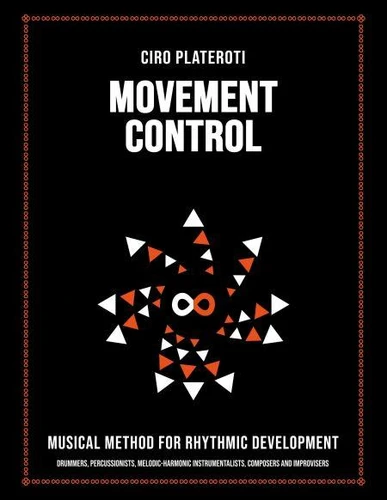
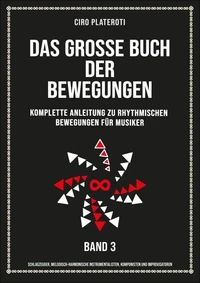
Movement Control / Complete Guide to Rhythmic Movements for Musicians
Par :Formats :
Disponible dans votre compte client Decitre ou Furet du Nord dès validation de votre commande. Le format ePub est :
- Compatible avec une lecture sur My Vivlio (smartphone, tablette, ordinateur)
- Compatible avec une lecture sur liseuses Vivlio
- Pour les liseuses autres que Vivlio, vous devez utiliser le logiciel Adobe Digital Edition. Non compatible avec la lecture sur les liseuses Kindle, Remarkable et Sony
 , qui est-ce ?
Notre partenaire de plateforme de lecture numérique où vous retrouverez l'ensemble de vos ebooks gratuitement
Pour en savoir plus sur nos ebooks, consultez notre aide en ligne ici
C'est si simple ! Lisez votre ebook avec l'app Vivlio sur votre tablette, mobile ou ordinateur :

- FormatePub
- ISBN978-0-463-33781-3
- EAN9780463337813
- Date de parution23/05/2022
- Protection num.pas de protection
- Infos supplémentairesepub
- ÉditeurBluewater
Résumé
Drummers, percussionists, melodic-harmonic instrumentalists, composers and improvisersRhythm is a vital force, it is present, in all disciplines that seek natural growth, is the factor thatprovides support for the vital energy in music, and is also the element that shapes our sentences. A melody without rhythm is practically amorphous, harmony without rhythm lacks order and meaning."Movement Control" is the author's eleventh book and is a musical rhythmic method that israised as a game of motor brain coordination and dissociation.
It is oriented to combine thousands of movement patterns between both hands with the aim ofplaying fluidly without stopping, while we conscientiously direct the rhythmic discourse to composemotifs, semi-phrases and musical phrases with syntactic meaning in our instrument. Although the motor and musical results are avant-garde and complex, as this is a method forexercise both hands, uses a very simple language, so simple that it is accessible andenriching both for musicians who know how to read and write with traditional musical notation orfor those who play music with feeling and intuition without knowing how to read and write.
Two letters (R and L Right and left ) are enough for us to combine them thousands and thousandsof rhythms appear ready to be incorporated into our rhythmic language that is, nothing more andnothing less that defines the form our music takes. The book is aimed at drummers and percussionists who play congas, bongos, timbales, hang drum, derbake, cajon, peal, batá drums, electronic music, beat box, body percussion, but also, to instrumentalists who use both hands, and play piano, guitar, bass flute, etc.
The content is super useful regardless of the style and, given the organization of the teaching materialallows us to apply it by combining several instruments in a single set very easily. The movement patterns each contain two natural rhythms which we callInternal rhythmic units (IRU)The central objective is to play the IRU with control, fluency, concentration, balance and musicality, which will infinitely enhance our cerebral agility applied to our instrument.
To complement the patterns and the game proposed with them, some practices are included.independent that greatly enrich all this content. Instrumentalists, composers and improvisers in general will find an inspiring treasure in therhythmic forms that are presented to combine and create music.
It is oriented to combine thousands of movement patterns between both hands with the aim ofplaying fluidly without stopping, while we conscientiously direct the rhythmic discourse to composemotifs, semi-phrases and musical phrases with syntactic meaning in our instrument. Although the motor and musical results are avant-garde and complex, as this is a method forexercise both hands, uses a very simple language, so simple that it is accessible andenriching both for musicians who know how to read and write with traditional musical notation orfor those who play music with feeling and intuition without knowing how to read and write.
Two letters (R and L Right and left ) are enough for us to combine them thousands and thousandsof rhythms appear ready to be incorporated into our rhythmic language that is, nothing more andnothing less that defines the form our music takes. The book is aimed at drummers and percussionists who play congas, bongos, timbales, hang drum, derbake, cajon, peal, batá drums, electronic music, beat box, body percussion, but also, to instrumentalists who use both hands, and play piano, guitar, bass flute, etc.
The content is super useful regardless of the style and, given the organization of the teaching materialallows us to apply it by combining several instruments in a single set very easily. The movement patterns each contain two natural rhythms which we callInternal rhythmic units (IRU)The central objective is to play the IRU with control, fluency, concentration, balance and musicality, which will infinitely enhance our cerebral agility applied to our instrument.
To complement the patterns and the game proposed with them, some practices are included.independent that greatly enrich all this content. Instrumentalists, composers and improvisers in general will find an inspiring treasure in therhythmic forms that are presented to combine and create music.
A propos de Ciro Plateroti


17,99 €


17,99 €

10,99 €
10,99 €

10,99 €

10,99 €

10,99 €

10,99 €

大書 的 機芯 第3卷. 大書 的 機芯, #3
E-book
10,99 €

大書 的 機芯 第2卷. 大書 的 機芯, #2
E-book
10,99 €

大書 的 機芯 第1卷. 大書 的 機芯, #1
E-book
10,99 €