Nouveauté
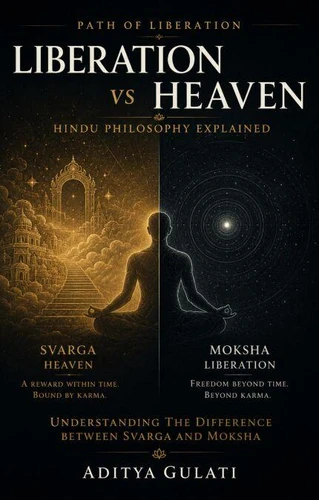
Liberation vs Heaven. Path of Liberation, #1
Par :Formats :
Disponible dans votre compte client Decitre ou Furet du Nord dès validation de votre commande. Le format ePub est :
- Compatible avec une lecture sur My Vivlio (smartphone, tablette, ordinateur)
- Compatible avec une lecture sur liseuses Vivlio
- Pour les liseuses autres que Vivlio, vous devez utiliser le logiciel Adobe Digital Edition. Non compatible avec la lecture sur les liseuses Kindle, Remarkable et Sony
 , qui est-ce ?
Notre partenaire de plateforme de lecture numérique où vous retrouverez l'ensemble de vos ebooks gratuitement
Pour en savoir plus sur nos ebooks, consultez notre aide en ligne ici
C'est si simple ! Lisez votre ebook avec l'app Vivlio sur votre tablette, mobile ou ordinateur :

- FormatePub
- ISBN8235866188
- EAN9798235866188
- Date de parution15/08/2026
- Protection num.pas de protection
- Infos supplémentairesepub
- ÉditeurIoakim Ioakim
Résumé
Liberation vs Heaven: Hindu Philosophy ExplainedUnderstanding the Difference Between Svarga and Moksha Across cultures and religions, heaven is imagined as the ultimate reward a realm of fulfillment beyond suffering, where moral effort finds its completion. But in Hindu philosophy, heaven is not the final goal. In this clear and deeply reasoned exploration, Liberation vs Heaven examines the crucial distinction between svarga (heaven) and moksha (liberation) - two ideas often confused, yet fundamentally different in meaning and purpose. Drawing from classical Hindu philosophical frameworks without devotional bias or sectarian comparison, this book explains: .
Why heaven is described as temporary and conditional. How karma operates within the concept of svarga. Why moksha is not a reward, but freedom. The difference between continuation of experience and transcendence of it. How this distinction reshapes ideas of morality, identity, and time Heaven, in Hindu thought, is acknowledged but it remains within the cycle of birth and death. Moksha, by contrast, represents release from that entire cycle. This book does not argue for belief.
It does not compare traditions competitively. It offers clarity. Written for readers who are intellectually curious yet unfamiliar with scriptural terminology, this volume presents complex metaphysical ideas in accessible language without oversimplification. If you have ever wondered whether paradise is the ultimate aim of spiritual life or whether something deeper lies beyond reward this book offers a precise and thoughtful answer.
Why heaven is described as temporary and conditional. How karma operates within the concept of svarga. Why moksha is not a reward, but freedom. The difference between continuation of experience and transcendence of it. How this distinction reshapes ideas of morality, identity, and time Heaven, in Hindu thought, is acknowledged but it remains within the cycle of birth and death. Moksha, by contrast, represents release from that entire cycle. This book does not argue for belief.
It does not compare traditions competitively. It offers clarity. Written for readers who are intellectually curious yet unfamiliar with scriptural terminology, this volume presents complex metaphysical ideas in accessible language without oversimplification. If you have ever wondered whether paradise is the ultimate aim of spiritual life or whether something deeper lies beyond reward this book offers a precise and thoughtful answer.
A propos de Aditya Gulati
5,49 €
5,49 €

3,49 €
5,49 €

6,49 €