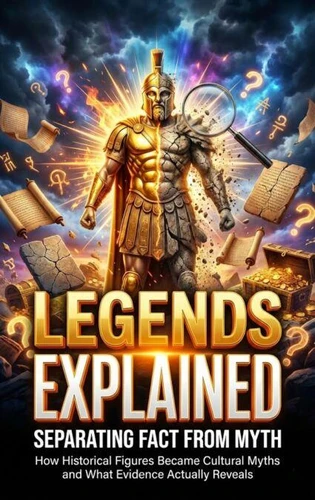
Legends Explained: Separating Fact From Myth. How Historical Figures Became Cultural Myths and What Evidence Actually Reveals
Par :Formats :
Disponible dans votre compte client Decitre ou Furet du Nord dès validation de votre commande. Le format ePub est :
- Compatible avec une lecture sur My Vivlio (smartphone, tablette, ordinateur)
- Compatible avec une lecture sur liseuses Vivlio
- Pour les liseuses autres que Vivlio, vous devez utiliser le logiciel Adobe Digital Edition. Non compatible avec la lecture sur les liseuses Kindle, Remarkable et Sony
 , qui est-ce ?
Notre partenaire de plateforme de lecture numérique où vous retrouverez l'ensemble de vos ebooks gratuitement
Pour en savoir plus sur nos ebooks, consultez notre aide en ligne ici
C'est si simple ! Lisez votre ebook avec l'app Vivlio sur votre tablette, mobile ou ordinateur :

- Nombre de pages202
- FormatePub
- ISBN978-3-565-25376-0
- EAN9783565253760
- Date de parution17/02/2026
- Protection num.pas de protection
- Taille2 Mo
- Infos supplémentairesepub
- ÉditeurEmphaloz Publishing House
Résumé
Historical figures transformed into cultural legends often bear little resemblance to their documented lives, as successive generations reshaped their stories to serve contemporary needs. This exploration examines how mythology obscures historical reality for figures like Robin Hood, William Tell, King Arthur, and others, using primary sources, archaeological evidence, and textual analysis to distinguish verifiable facts from accumulated legend.
Through systematic comparison of earliest documentary references against later embellishments, discover how cultural needs shaped legendary narratives.
Examine how medieval chroniclers transformed possible historical figures into moral exemplars, how nationalist movements appropriated legends for political legitimacy, how romantic literature added layers of fiction that subsequent generations accepted as fact, how modern media further distorted already mythologized figures. Documentary evidence-contemporary chronicles, legal records, property documents, archaeological findings-provides baseline information about historical contexts in which legendary figures may have existed.
Textual analysis traces how stories evolved across manuscript traditions, revealing additions, omissions, and transformations that reflect changing cultural values rather than historical discovery. Each case study analyzes specific mechanisms of myth-making. Understand how oral tradition altered details through transmission, how political agendas shaped written records, how gaps in evidence invited imaginative speculation, how popular demand for heroic narratives overwhelmed scholarly caution, and why separating historical kernel from legendary accretion remains methodologically challenging yet intellectually necessary.
Examine how medieval chroniclers transformed possible historical figures into moral exemplars, how nationalist movements appropriated legends for political legitimacy, how romantic literature added layers of fiction that subsequent generations accepted as fact, how modern media further distorted already mythologized figures. Documentary evidence-contemporary chronicles, legal records, property documents, archaeological findings-provides baseline information about historical contexts in which legendary figures may have existed.
Textual analysis traces how stories evolved across manuscript traditions, revealing additions, omissions, and transformations that reflect changing cultural values rather than historical discovery. Each case study analyzes specific mechanisms of myth-making. Understand how oral tradition altered details through transmission, how political agendas shaped written records, how gaps in evidence invited imaginative speculation, how popular demand for heroic narratives overwhelmed scholarly caution, and why separating historical kernel from legendary accretion remains methodologically challenging yet intellectually necessary.