SOLDES
Jusqu'à -70% sur une sélection d'articles*

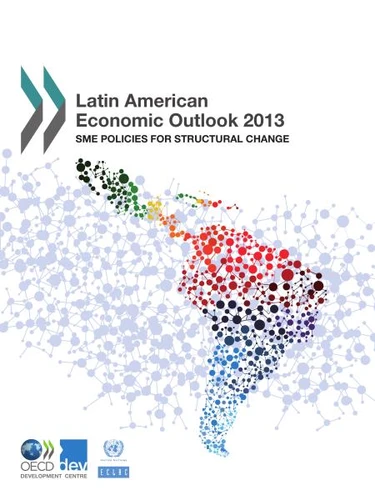
Latin american economic outlook 2013 : sme policies for structural change
Par :Formats :
Disponible dans votre compte client Decitre ou Furet du Nord dès validation de votre commande. Le format PDF est :
- Compatible avec une lecture sur My Vivlio (smartphone, tablette, ordinateur)
- Compatible avec une lecture sur liseuses Vivlio
- Pour les liseuses autres que Vivlio, vous devez utiliser le logiciel Adobe Digital Edition. Non compatible avec la lecture sur les liseuses Kindle, Remarkable et Sony
 , qui est-ce ?
Notre partenaire de plateforme de lecture numérique où vous retrouverez l'ensemble de vos ebooks gratuitement
Pour en savoir plus sur nos ebooks, consultez notre aide en ligne ici
C'est si simple ! Lisez votre ebook avec l'app Vivlio sur votre tablette, mobile ou ordinateur :

- Nombre de pages155
- FormatPDF
- ISBN978-92-64-18073-4
- EAN9789264180734
- Date de parution16/11/2012
- Protection num.Digital Watermarking
- Taille3 Mo
- Infos supplémentairespdf
- ÉditeurOECD
Résumé
Latin America has weathered the recent turbulence in the global economy with relative strength, but the region now faces - beyond the short-term global uncertainty -- important medium-term risks. Policy makers need to make use of the policy space at their disposal to lay the foundations for inclusive and sustainable growth. SMEs play a key role as they are an integral part of the economic fabric, comprising over 95% of firms in the region as well as providing employment for over 60% of the region's inhabitants.
Nevertheless, relative to SMEs in the OECD, on average SMEs in Latin America exhibit low levels of relative productivity and weak links with the rest of the economy. In light of several decades of blanket SME policies with limited impacts in the region, this report proposes a more integrated approach that caters to the productive context and firm specificities. SMEs are part of a greater productive structure, and productive development policies need to be designed to address the particularities of heterogeneous SMEs.
These differences can be manifested in many ways including the markets they serve, the types of products they produce, the level of technological sophistication and use of human capital involved in production, as well as the productive links with other firms in the industry. Providing policies which are adapted to the productive context requires co-ordination between various policy areas and levels of government to ensure that interventions are complimentary and effective.
With this perspective in mind, the report explores key policy areas that address some of the main challenges to SMEs in the region including access to finance, skill development, innovation, and productive development.
Nevertheless, relative to SMEs in the OECD, on average SMEs in Latin America exhibit low levels of relative productivity and weak links with the rest of the economy. In light of several decades of blanket SME policies with limited impacts in the region, this report proposes a more integrated approach that caters to the productive context and firm specificities. SMEs are part of a greater productive structure, and productive development policies need to be designed to address the particularities of heterogeneous SMEs.
These differences can be manifested in many ways including the markets they serve, the types of products they produce, the level of technological sophistication and use of human capital involved in production, as well as the productive links with other firms in the industry. Providing policies which are adapted to the productive context requires co-ordination between various policy areas and levels of government to ensure that interventions are complimentary and effective.
With this perspective in mind, the report explores key policy areas that address some of the main challenges to SMEs in the region including access to finance, skill development, innovation, and productive development.
A propos de OCDE


32,99 €

72,99 €

33,99 €

32,99 €
32,99 €

32,00 €

Tax compilance by design
E-book
16,00 €

16,00 €

19,00 €

16,00 €

25,00 €


23,00 €

Women in business 2014
E-book
31,00 €

