SOLDES
Jusqu'à -70% sur une sélection d'articles*

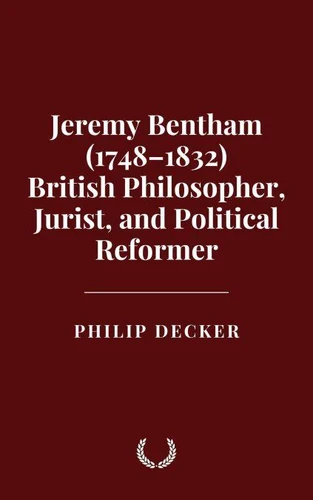
Jeremy Bentham (1748–1832) British Philosopher, Jurist, and Political Reformer
Par :Formats :
Disponible dans votre compte client Decitre ou Furet du Nord dès validation de votre commande. Le format ePub est :
- Compatible avec une lecture sur My Vivlio (smartphone, tablette, ordinateur)
- Compatible avec une lecture sur liseuses Vivlio
- Pour les liseuses autres que Vivlio, vous devez utiliser le logiciel Adobe Digital Edition. Non compatible avec la lecture sur les liseuses Kindle, Remarkable et Sony
 , qui est-ce ?
Notre partenaire de plateforme de lecture numérique où vous retrouverez l'ensemble de vos ebooks gratuitement
Pour en savoir plus sur nos ebooks, consultez notre aide en ligne ici
C'est si simple ! Lisez votre ebook avec l'app Vivlio sur votre tablette, mobile ou ordinateur :

- FormatePub
- ISBN8230415268
- EAN9798230415268
- Date de parution26/01/2025
- Protection num.pas de protection
- Infos supplémentairesepub
- ÉditeurIndependently Published
Résumé
This book explores the life, philosophy, and enduring influence of Jeremy Bentham (1748-1832), the British philosopher, jurist, and political reformer who is best known as the founder of modern utilitarianism. Through an in-depth analysis of his ideas on law, governance, ethics, social reform, and human rights, the book traces Bentham's contributions to modern philosophy and examines the complex legacy of his utilitarian framework in the 21st century.
The text delves into Bentham's vision of a society governed by rational laws and principles aimed at maximizing happiness and minimizing suffering for the greatest number, offering a critical examination of his utilitarian calculus, his advocacy for legal codification, and his influence on subsequent political and legal thinkers, including John Stuart Mill. It further explores Bentham's positions on gender equality, social justice, and the role of the state, as well as the practical implications of his ideas on penal reform, economics, and public policy.
The book also engages with critiques of Bentham's philosophy, considering challenges to his ideas by figures such as Kant and Mill, and reflects on how Bentham's ideas have shaped modern ethical debates and reform movements, from the abolition of the death penalty to the expansion of human rights. Ultimately, the book asserts that Bentham's utilitarianism, despite its limitations, continues to offer valuable insights into the moral and political questions of our time, with its focus on social welfare, rational governance, and the pursuit of justice remaining deeply relevant in contemporary discussions of law, democracy, and global ethics.
The text delves into Bentham's vision of a society governed by rational laws and principles aimed at maximizing happiness and minimizing suffering for the greatest number, offering a critical examination of his utilitarian calculus, his advocacy for legal codification, and his influence on subsequent political and legal thinkers, including John Stuart Mill. It further explores Bentham's positions on gender equality, social justice, and the role of the state, as well as the practical implications of his ideas on penal reform, economics, and public policy.
The book also engages with critiques of Bentham's philosophy, considering challenges to his ideas by figures such as Kant and Mill, and reflects on how Bentham's ideas have shaped modern ethical debates and reform movements, from the abolition of the death penalty to the expansion of human rights. Ultimately, the book asserts that Bentham's utilitarianism, despite its limitations, continues to offer valuable insights into the moral and political questions of our time, with its focus on social welfare, rational governance, and the pursuit of justice remaining deeply relevant in contemporary discussions of law, democracy, and global ethics.
A propos de Philip Decker

2,99 €


2,99 €

2,99 €



2,99 €

2,99 €


2,99 €