SOLDES
Jusqu'à -70% sur une sélection d'articles*

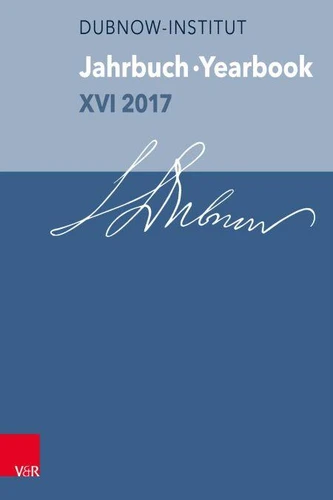
Jahrbuch des Dubnow-Instituts / Dubnow Institute Yearbook XVI/2017
Par : , , , ,Formats :
Disponible dans votre compte client Decitre ou Furet du Nord dès validation de votre commande. Le format PDF est :
- Compatible avec une lecture sur My Vivlio (smartphone, tablette, ordinateur)
- Compatible avec une lecture sur liseuses Vivlio
- Pour les liseuses autres que Vivlio, vous devez utiliser le logiciel Adobe Digital Edition. Non compatible avec la lecture sur les liseuses Kindle, Remarkable et Sony
 , qui est-ce ?
Notre partenaire de plateforme de lecture numérique où vous retrouverez l'ensemble de vos ebooks gratuitement
Pour en savoir plus sur nos ebooks, consultez notre aide en ligne ici
C'est si simple ! Lisez votre ebook avec l'app Vivlio sur votre tablette, mobile ou ordinateur :

- Nombre de pages635
- FormatPDF
- ISBN978-3-647-37071-2
- EAN9783647370712
- Date de parution12/08/2019
- Protection num.pas de protection
- Taille5 Mo
- Infos supplémentairespdf
- ÉditeurVandenhoeck & Ruprecht
Résumé
The 2017 edition of the Simon Dubnow Institute Yearbook encompasses two focal points: The first deals with the year 1938, an incisive year for Europe's Jews, against the background of Jewish experiences and political activities in the nineteenth and early twentieth centuries. On the basis of issues surrounding citizenship, minority rights, flight, and migration, this dramatic crisis is cast in a new light, with the focus placed especially on the states of Central and Eastern Europe.
The second focal point takes the enduring surge in biographical research as an impetus to examine the reasons for the popularity of this genre within Jewish Studies. Using examples from current research projects on Jewish intellectuals, core issues and challenges of biographical writing are presented and discussed. The general part and the special sections of the Yearbook contain contributions on the conjunction of political and religious history, on the study of nationalism and historical semantics, as well as on Sholem Aleichem, Franz Neumann, and Ernst Grumach.
The second focal point takes the enduring surge in biographical research as an impetus to examine the reasons for the popularity of this genre within Jewish Studies. Using examples from current research projects on Jewish intellectuals, core issues and challenges of biographical writing are presented and discussed. The general part and the special sections of the Yearbook contain contributions on the conjunction of political and religious history, on the study of nationalism and historical semantics, as well as on Sholem Aleichem, Franz Neumann, and Ernst Grumach.
A propos de Yfaat Weiss

24,00 €
25,00 €
45,00 €