SOLDES
Jusqu'à -70% sur une sélection d'articles*

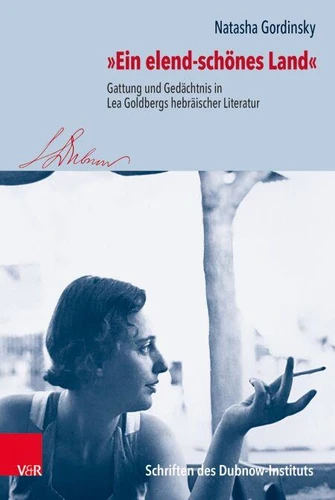
»Ein elend-schönes Land«. Gattung und Gedächtnis in Lea Goldbergs hebräischer Literatur. Aus dem Hebräischen von Rainer Wenzel
Par : , ,Formats :
Disponible dans votre compte client Decitre ou Furet du Nord dès validation de votre commande. Le format PDF est :
- Compatible avec une lecture sur My Vivlio (smartphone, tablette, ordinateur)
- Compatible avec une lecture sur liseuses Vivlio
- Pour les liseuses autres que Vivlio, vous devez utiliser le logiciel Adobe Digital Edition. Non compatible avec la lecture sur les liseuses Kindle, Remarkable et Sony
 , qui est-ce ?
Notre partenaire de plateforme de lecture numérique où vous retrouverez l'ensemble de vos ebooks gratuitement
Pour en savoir plus sur nos ebooks, consultez notre aide en ligne ici
C'est si simple ! Lisez votre ebook avec l'app Vivlio sur votre tablette, mobile ou ordinateur :

- Nombre de pages240
- FormatPDF
- ISBN978-3-647-37081-1
- EAN9783647370811
- Date de parution03/12/2018
- Protection num.pas de protection
- Taille5 Mo
- Infos supplémentairespdf
- ÉditeurVandenhoeck & Ruprecht
Résumé
Lea Goldberg numbers among the most important voices in Hebrew poetry of the twentieth century. The young poet emigrated to Palestine from Lithuania in 1935 and spent the first ten years trying her hand at all the main genres of literary writing - verse, prose, essays, journalism, and literary translation. This monograph is dedicated to this most productive period in Goldberg's intellectual life. It reveals that at the core of Lea Goldberg's early works lies a systematic engagement with Europe.
Goldberg's texts, so the hypothesis of Natasha Gordinsky, examine Europe in a twofold sense: as a geopolitical space being torn apart between two totalitarian regimes - National Socialism and Stalinism - and as a literary canon, to which she related primarily through recourse to German and Russian literature. Her own experiences of World War I in Balashov (in Saratov Oblast) and the 1930s during her studies in Berlin and Bonn play a special role here, both for her political and cultural reflections as well as for their poetic textualization in literary works.
The Hebrew language to Lea Goldberg thus became the poetic means of transferring and preserving European literature.
Goldberg's texts, so the hypothesis of Natasha Gordinsky, examine Europe in a twofold sense: as a geopolitical space being torn apart between two totalitarian regimes - National Socialism and Stalinism - and as a literary canon, to which she related primarily through recourse to German and Russian literature. Her own experiences of World War I in Balashov (in Saratov Oblast) and the 1930s during her studies in Berlin and Bonn play a special role here, both for her political and cultural reflections as well as for their poetic textualization in literary works.
The Hebrew language to Lea Goldberg thus became the poetic means of transferring and preserving European literature.
