
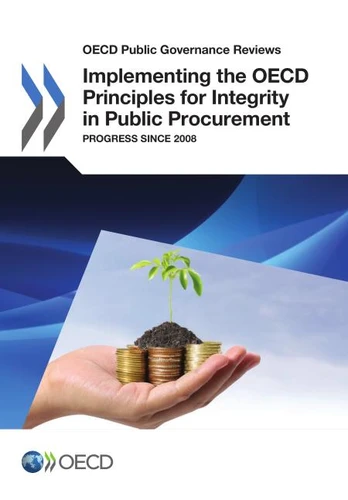
Implementing the OECD Principles for Integrity in Public Procurement / Progress since 2008
Par :Formats :
Disponible dans votre compte client Decitre ou Furet du Nord dès validation de votre commande. Le format PDF est :
- Compatible avec une lecture sur My Vivlio (smartphone, tablette, ordinateur)
- Compatible avec une lecture sur liseuses Vivlio
- Pour les liseuses autres que Vivlio, vous devez utiliser le logiciel Adobe Digital Edition. Non compatible avec la lecture sur les liseuses Kindle, Remarkable et Sony
 , qui est-ce ?
Notre partenaire de plateforme de lecture numérique où vous retrouverez l'ensemble de vos ebooks gratuitement
Pour en savoir plus sur nos ebooks, consultez notre aide en ligne ici
C'est si simple ! Lisez votre ebook avec l'app Vivlio sur votre tablette, mobile ou ordinateur :

- Nombre de pages136
- FormatPDF
- ISBN978-92-64-20138-5
- EAN9789264201385
- Date de parution21/11/2013
- Protection num.Digital Watermarking
- Taille6 Mo
- Infos supplémentairespdf
- ÉditeurOECD
Résumé
With procurement accounting for 13% of GDP and a third of government expenditures on average in OECD countries, investing in appropriate processes to mitigate risks of waste and corruption leads to efficiency gains considering the financial stakes. In 2008 OECD countries committed to promoting transparency, integrity, good management as well as accountability in procurement with the adoption of the OECD Recommendation on Enhancing Integrity in Public Procurement.
This assessment of progress made in OECD countries shows that as a result of austerity measures governments have been under tight budgetary constraints to provide smarter procurement, that is better service delivery at lower cost. Because environmental protection has become a growing societal imperative, the review of progress made shows that there is a strong political push in OECD countries to integrate environmental considerations in procurement.
With the economic crisis, some governments have been tempted to use procurement to ease its socio-economic impact on societies by providing a substitute for direct social policies to support employment for specific communities. However few governments have invested in prioritising the objectives pursued through procurement, assessing their costs or benefits, and measuring their actual impact.
This assessment of progress made in OECD countries shows that as a result of austerity measures governments have been under tight budgetary constraints to provide smarter procurement, that is better service delivery at lower cost. Because environmental protection has become a growing societal imperative, the review of progress made shows that there is a strong political push in OECD countries to integrate environmental considerations in procurement.
With the economic crisis, some governments have been tempted to use procurement to ease its socio-economic impact on societies by providing a substitute for direct social policies to support employment for specific communities. However few governments have invested in prioritising the objectives pursued through procurement, assessing their costs or benefits, and measuring their actual impact.
A propos de OCDE


32,99 €

72,99 €

33,99 €

32,99 €
32,99 €

32,00 €

25,00 €

Tax compilance by design
E-book
16,00 €

16,00 €

19,00 €

16,00 €


23,00 €

Women in business 2014
E-book
31,00 €


27,00 €