Fear is one of the most powerful forces in human life. It protects us from danger, sharpens our awareness, and prepares us to respond quickly when real threats appear. But fear has another characteristic that is often overlooked: fear is rarely created by events alone. It often grows from the way events are interpreted. When fear is framed, repeated, and shared across a society, it begins to organize human behavior.
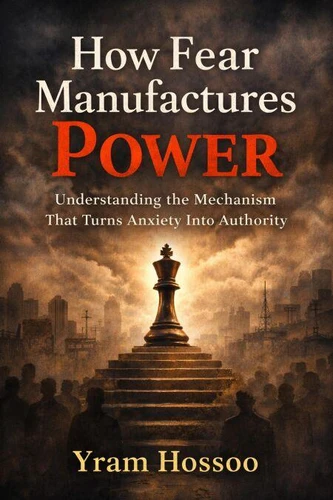
Communities change their rules. Institutions expand their authority. Leaders rise promising protection. Gradually, fear becomes something larger than the original event. It becomes power. How Fear Manufactures Power examines this mechanism through thirty-five short chapters that reveal how fear can shape authority across politics, institutions, culture, and public life. From the fear of chaos and uncertainty to the fear of failure, fragmentation, and loss of identity, each chapter explores how emotional reactions can quietly evolve into systems of control, influence, and institutional power.
The book does not deny the existence of real danger. Fear can protect lives and communities. But when fear becomes the central organizing principle of society, power structures often depend on keeping that fear alive. By examining how fear becomes authority, this book invites readers to see power from a different perspective. When the mechanism becomes visible, fear loses its ability to quietly manufacture power.
And societies gain the ability to respond to uncertainty with awareness rather than reflex.
Fear is one of the most powerful forces in human life. It protects us from danger, sharpens our awareness, and prepares us to respond quickly when real threats appear. But fear has another characteristic that is often overlooked: fear is rarely created by events alone. It often grows from the way events are interpreted. When fear is framed, repeated, and shared across a society, it begins to organize human behavior.
Communities change their rules. Institutions expand their authority. Leaders rise promising protection. Gradually, fear becomes something larger than the original event. It becomes power. How Fear Manufactures Power examines this mechanism through thirty-five short chapters that reveal how fear can shape authority across politics, institutions, culture, and public life. From the fear of chaos and uncertainty to the fear of failure, fragmentation, and loss of identity, each chapter explores how emotional reactions can quietly evolve into systems of control, influence, and institutional power.
The book does not deny the existence of real danger. Fear can protect lives and communities. But when fear becomes the central organizing principle of society, power structures often depend on keeping that fear alive. By examining how fear becomes authority, this book invites readers to see power from a different perspective. When the mechanism becomes visible, fear loses its ability to quietly manufacture power.
And societies gain the ability to respond to uncertainty with awareness rather than reflex.