Dr. Florian Huber ist seit 2013 Wissenschaftlicher Mitarbeiter am Kompetenzzentrum für Regionalgeschichte an der Freien Universität Bozen.
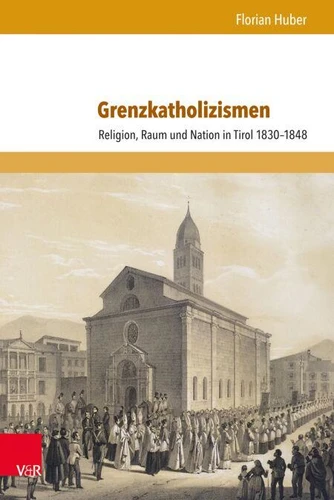
Grenzkatholizismen. Religion, Raum und Nation in Tirol 1830–1848
Par :Formats :
Disponible dans votre compte client Decitre ou Furet du Nord dès validation de votre commande. Le format PDF est :
- Compatible avec une lecture sur My Vivlio (smartphone, tablette, ordinateur)
- Compatible avec une lecture sur liseuses Vivlio
- Pour les liseuses autres que Vivlio, vous devez utiliser le logiciel Adobe Digital Edition. Non compatible avec la lecture sur les liseuses Kindle, Remarkable et Sony
 , qui est-ce ?
Notre partenaire de plateforme de lecture numérique où vous retrouverez l'ensemble de vos ebooks gratuitement
Pour en savoir plus sur nos ebooks, consultez notre aide en ligne ici
C'est si simple ! Lisez votre ebook avec l'app Vivlio sur votre tablette, mobile ou ordinateur :

- Nombre de pages426
- FormatPDF
- ISBN978-3-8470-0574-2
- EAN9783847005742
- Date de parution13/06/2016
- Protection num.pas de protection
- Taille9 Mo
- Infos supplémentairespdf
- ÉditeurV&R Unipress
Résumé
Im Vormärz veränderten zentralstaatliche Durchdringung, mediale Innovation, wirtschaftlicher Wandel, neue politische Ideen und »religious revivals« die Gesellschaften Europas grundlegend. Grenzräume wie das Kronland Tirol im Westen der Habsburgermonarchie waren dem in besonderem Maße ausgesetzt. Hier prallten »deutsche« und »italienische« katholische Kulturen aufeinander. Deutschsprachige Ultramontane im Norden und liberale Katholiken im italienischen Süden Tirols stellten sich anders zum modernen Staat und verfolgten unterschiedliche Gesellschaftsentwürfe.
Für beide aber war Religion das zentrale Bindeglied zur übergeordneten Kulturnation. Die Studie verbindet Ansätze der borderland studies mit religions- und medienhistorischen Fragestellungen und zeigt, wie sehr katholizismusgeschichtliche Untersuchungen von transnationalen Perspektiven profitieren können. The Vormärz can be read as a phase of profound change: enforcement of the central government, media innovation, economic change, new political ideas and religious revivals fundamentally changed Europe's society.
Border regions were particularly affected, as was Tyrol, a crownland in the western part of the Habsburg Monarchy, where the "German" and "Italian" catholic cultures clashed as a result of their starkly different reactions to the "impositions of modernity" (R. Schlögl). German-speaking Ultramontanes in northern Tyrol and liberal Catholics in the Italian-speaking south had diverging relationships with the modern state and pursued different models of society.
For both branches of Catholicism religion was the central link to their respective nationalities. The study combines the core approaches of borderland studies with religious and media history and shows how historical studies of Catholicism can benefit from transnational perspectives.
Für beide aber war Religion das zentrale Bindeglied zur übergeordneten Kulturnation. Die Studie verbindet Ansätze der borderland studies mit religions- und medienhistorischen Fragestellungen und zeigt, wie sehr katholizismusgeschichtliche Untersuchungen von transnationalen Perspektiven profitieren können. The Vormärz can be read as a phase of profound change: enforcement of the central government, media innovation, economic change, new political ideas and religious revivals fundamentally changed Europe's society.
Border regions were particularly affected, as was Tyrol, a crownland in the western part of the Habsburg Monarchy, where the "German" and "Italian" catholic cultures clashed as a result of their starkly different reactions to the "impositions of modernity" (R. Schlögl). German-speaking Ultramontanes in northern Tyrol and liberal Catholics in the Italian-speaking south had diverging relationships with the modern state and pursued different models of society.
For both branches of Catholicism religion was the central link to their respective nationalities. The study combines the core approaches of borderland studies with religious and media history and shows how historical studies of Catholicism can benefit from transnational perspectives.
A propos de Florian Huber



9,99 €