SOLDES
Jusqu'à -70% sur une sélection d'articles*

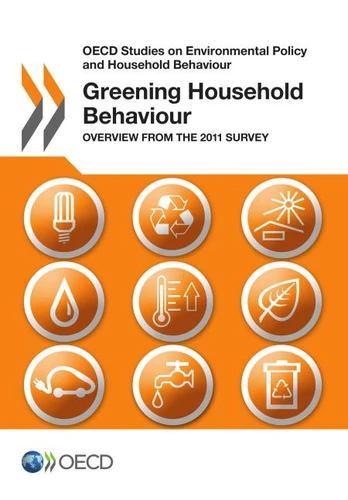
Greening household behaviour - overview from the 2011 survey - oecd studies on environmental policy
Par :Formats :
Disponible dans votre compte client Decitre ou Furet du Nord dès validation de votre commande. Le format PDF est :
- Compatible avec une lecture sur My Vivlio (smartphone, tablette, ordinateur)
- Compatible avec une lecture sur liseuses Vivlio
- Pour les liseuses autres que Vivlio, vous devez utiliser le logiciel Adobe Digital Edition. Non compatible avec la lecture sur les liseuses Kindle, Remarkable et Sony
 , qui est-ce ?
Notre partenaire de plateforme de lecture numérique où vous retrouverez l'ensemble de vos ebooks gratuitement
Pour en savoir plus sur nos ebooks, consultez notre aide en ligne ici
C'est si simple ! Lisez votre ebook avec l'app Vivlio sur votre tablette, mobile ou ordinateur :

- Nombre de pages304
- FormatPDF
- ISBN978-92-64-18137-3
- EAN9789264181373
- Date de parution04/07/2013
- Protection num.Digital Watermarking
- Taille3 Mo
- Infos supplémentairespdf
- ÉditeurOECD
Résumé
Developing growth strategies that promote greener lifestyles requires a good understanding of the factors that affect people's behaviour towards the environment. Recent OECD work based on periodic surveys of more than 10 000 households across a number of countries and areas represents a breakthrough by providing a common framework to collect unique empirical evidence for better policy designThis publication presents a data overview of the most recent round of the survey implemented in five areas (energy, food, transport, waste, and water) and 11 countries: Australia, Canada, Chile, France, Israel, Japan, Korea, the Netherlands, Spain, Sweden and Switzerland.
The new survey confirms the importance of providing the right economic incentives for influencing our decisions. The findings indicate that "soft" measures such as labeling and public information campaigns also have a significant complementary role to play. Spurring desirable behaviour change requires a mix of these instruments.
The new survey confirms the importance of providing the right economic incentives for influencing our decisions. The findings indicate that "soft" measures such as labeling and public information campaigns also have a significant complementary role to play. Spurring desirable behaviour change requires a mix of these instruments.
A propos de OCDE


32,99 €

72,99 €

33,99 €

32,99 €
32,99 €

32,00 €

Tax compilance by design
E-book
16,00 €

16,00 €

19,00 €

16,00 €

25,00 €


23,00 €

Women in business 2014
E-book
31,00 €

