SOLDES
Jusqu'à -70% sur une sélection d'articles*

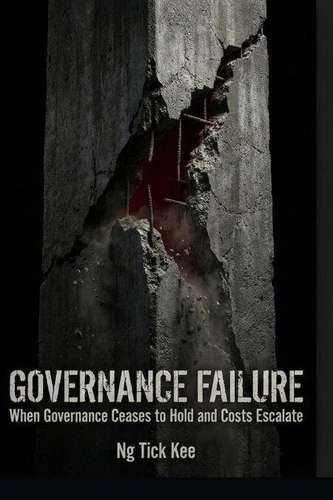
Governance Failure: When Governance Ceases to Hold and Costs Escalate
Par :Formats :
Disponible dans votre compte client Decitre ou Furet du Nord dès validation de votre commande. Le format ePub protégé est :
- Compatible avec une lecture sur My Vivlio (smartphone, tablette, ordinateur)
- Compatible avec une lecture sur liseuses Vivlio
- Pour les liseuses autres que Vivlio, vous devez utiliser le logiciel Adobe Digital Edition. Non compatible avec la lecture sur les liseuses Kindle, Remarkable et Sony
- Non compatible avec un achat hors France métropolitaine
 , qui est-ce ?
Notre partenaire de plateforme de lecture numérique où vous retrouverez l'ensemble de vos ebooks gratuitement
Pour en savoir plus sur nos ebooks, consultez notre aide en ligne ici
C'est si simple ! Lisez votre ebook avec l'app Vivlio sur votre tablette, mobile ou ordinateur :

- FormatePub
- ISBN8233020315
- EAN9798233020315
- Date de parution08/01/2026
- Protection num.Adobe DRM
- Infos supplémentairesepub
- ÉditeurLinda Balsamo
Résumé
Governance failure is not an accident; it is the non-existence of conditions. In organizational operations, we often witness a suffocating phenomenon: regulations multiply, meetings lengthen, yet fewer people can truly take responsibility. Good people try too hard, and goodwill becomes the breeding ground for errors to survive. "Governance Failure: When Governance Ceases to Hold and Costs Escalate" is a pathological report on system collapse.
Ng Tick Kee argues that governance failure is not the beginning of chaos, but the disappearance of responsibility. Core Insights: The Compounding Effect of Errors: Once a governance error enters the structural layer, it generates a "compounding effect." One wrong step leads to another, and subsequent decisions inherit the debt of past misjudgments. Trust Insolvency: Trust insolvency is more fatal than financial bankruptcy.
Finances can be liquidated, but once trust hits zero, you lose the qualification to be "entrusted" by the world. Management Substitution: When management tools (KPIs, processes, audits) begin to replace governance (responsibility anchoring), the organization looks busier but becomes hollow. Unbudgetable Costs: The real financial disaster is not visible loss, but costs that cannot be budgeted because they stem from internal disorder-rework, delays, and lost opportunities.
This book is a structural autopsy for decision-makers. It does not offer cheap hope. It offers clarity. Learn to recognize when governance conditions no longer hold, so you can stop amplifying the cost of failure.
Ng Tick Kee argues that governance failure is not the beginning of chaos, but the disappearance of responsibility. Core Insights: The Compounding Effect of Errors: Once a governance error enters the structural layer, it generates a "compounding effect." One wrong step leads to another, and subsequent decisions inherit the debt of past misjudgments. Trust Insolvency: Trust insolvency is more fatal than financial bankruptcy.
Finances can be liquidated, but once trust hits zero, you lose the qualification to be "entrusted" by the world. Management Substitution: When management tools (KPIs, processes, audits) begin to replace governance (responsibility anchoring), the organization looks busier but becomes hollow. Unbudgetable Costs: The real financial disaster is not visible loss, but costs that cannot be budgeted because they stem from internal disorder-rework, delays, and lost opportunities.
This book is a structural autopsy for decision-makers. It does not offer cheap hope. It offers clarity. Learn to recognize when governance conditions no longer hold, so you can stop amplifying the cost of failure.