Fiona Mitchell is an English-language nonfiction author recognized for her insightful books on human behavior, emotional wellbeing, and the psychology of modern living. Her writing combines careful research with a calm, conversational tone, helping readers explore complex emotional patterns with clarity and nuance rather than simplistic self-help formulas. Fiona often focuses on resilience, relationships, and the quiet internal shifts that shape personal growth over time.
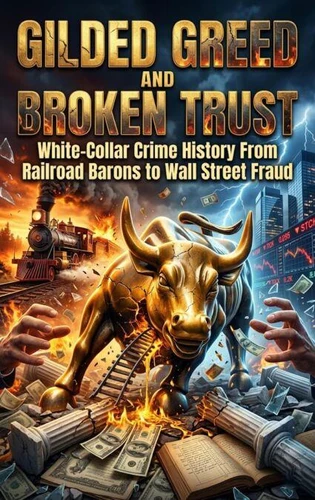
Gilded Greed and Broken Trust. White-Collar Crime History From Railroad Barons to Wall Street Fraud
Par :Formats :
Disponible dans votre compte client Decitre ou Furet du Nord dès validation de votre commande. Le format ePub est :
- Compatible avec une lecture sur My Vivlio (smartphone, tablette, ordinateur)
- Compatible avec une lecture sur liseuses Vivlio
- Pour les liseuses autres que Vivlio, vous devez utiliser le logiciel Adobe Digital Edition. Non compatible avec la lecture sur les liseuses Kindle, Remarkable et Sony
 , qui est-ce ?
Notre partenaire de plateforme de lecture numérique où vous retrouverez l'ensemble de vos ebooks gratuitement
Pour en savoir plus sur nos ebooks, consultez notre aide en ligne ici
C'est si simple ! Lisez votre ebook avec l'app Vivlio sur votre tablette, mobile ou ordinateur :

- Nombre de pages165
- FormatePub
- ISBN978-3-565-45539-3
- EAN9783565455393
- Date de parution23/05/2026
- Protection num.pas de protection
- Taille2 Mo
- Infos supplémentairesepub
- ÉditeurEmphaloz Publishing House
Résumé
This book examines how the fortunes of 19th century railroad tycoons concealed practices that eroded public trust, tracing the connection between robber baron era manipulation and later Wall Street fraud. It explores how recurring cycles of financial excess reshaped American capitalism and contributed to lasting skepticism toward concentrated corporate power in both the United States and Europe.
Railroad magnates such as Jay Gould and Cornelius Vanderbilt expanded their empires through monopolistic control, stock watering, political bribery, and aggressive tactics designed to crush rivals.
Their ability to influence legislators through land grants and favorable regulation established a pattern in which wealth could purchase political protection, laying foundations later mirrored in modern financial lobbying and market deregulation. The work then traces the evolution of fraud from overt industrial coercion to more sophisticated financial deception. Schemes associated with figures such as Charles Ponzi, Michael Milken, and Bernard Ebbers reveal how information asymmetry, speculative optimism, and manipulated accounting practices transformed fraud into a systemic financial tool operating beneath a veneer of legitimacy. Public backlash against these abuses eventually produced major regulatory reforms, including the Sherman Antitrust Act, the creation of the U.
S. Securities and Exchange Commission, and later transparency measures such as the Sarbanes-Oxley Act. Together, these cycles illustrate the recurring tension between entrepreneurial ambition and the temptation to exploit public trust.
Their ability to influence legislators through land grants and favorable regulation established a pattern in which wealth could purchase political protection, laying foundations later mirrored in modern financial lobbying and market deregulation. The work then traces the evolution of fraud from overt industrial coercion to more sophisticated financial deception. Schemes associated with figures such as Charles Ponzi, Michael Milken, and Bernard Ebbers reveal how information asymmetry, speculative optimism, and manipulated accounting practices transformed fraud into a systemic financial tool operating beneath a veneer of legitimacy. Public backlash against these abuses eventually produced major regulatory reforms, including the Sherman Antitrust Act, the creation of the U.
S. Securities and Exchange Commission, and later transparency measures such as the Sarbanes-Oxley Act. Together, these cycles illustrate the recurring tension between entrepreneurial ambition and the temptation to exploit public trust.