SOLDES
Jusqu'à -70% sur une sélection d'articles*

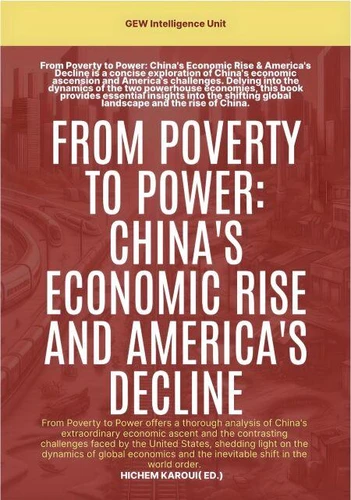
From Poverty To Power: China's Economic Rise And America's Decline
Par : ,Formats :
Disponible dans votre compte client Decitre ou Furet du Nord dès validation de votre commande. Le format ePub protégé est :
- Compatible avec une lecture sur My Vivlio (smartphone, tablette, ordinateur)
- Compatible avec une lecture sur liseuses Vivlio
- Pour les liseuses autres que Vivlio, vous devez utiliser le logiciel Adobe Digital Edition. Non compatible avec la lecture sur les liseuses Kindle, Remarkable et Sony
- Non compatible avec un achat hors France métropolitaine
 , qui est-ce ?
Notre partenaire de plateforme de lecture numérique où vous retrouverez l'ensemble de vos ebooks gratuitement
Pour en savoir plus sur nos ebooks, consultez notre aide en ligne ici
C'est si simple ! Lisez votre ebook avec l'app Vivlio sur votre tablette, mobile ou ordinateur :

- FormatePub
- ISBN8227873927
- EAN9798227873927
- Date de parution28/05/2024
- Protection num.Adobe DRM
- Infos supplémentairesepub
- ÉditeurBig Dog Books, LLC
Résumé
"From Poverty to Power" provides a nuanced analysis of the economic rise of China and the decline of the United States, including the impacts of BRICS, corporate influence on economic policy, sustainability challenges, and the evolving global power dynamics. The main idea of the book is to provide an extensive comparison and analysis of China's economic rise and America's economic challenges. It discusses the historical context and drivers behind China's economic growth and poverty reduction, emphasizing the role of government intervention and state capitalism.
Conversely, it examines the predominantly free-market approach of the U. S. economy and its navigation through crises like the 2008 financial meltdown. The book underlines the interdependence between the two economic giants, exploring themes of economic efficiency, debt dynamics, governance, and the socio-political influences on policy formulation. It underscores the importance of responsible governance, innovation, and strategic planning for the U.
S. to address economic challenges and achieve long-term sustainability. Key Takeaways China's Economic Ascent: China's rapid economic growth, driven by state-led initiatives and strategic planning, has significantly altered global trade and investment patterns. U. S. Economic Challenges: The United States faces formidable challenges, including trade imbalances, corporate influence on policy, and sustainability issues, amid China's rising influence.
BRICS Influence: The emerging power bloc of BRICS (Brazil, Russia, India, China, South Africa) is reshaping global economic governance and challenging Western dominance. Corporate Power: Corporate lobbying and influence have a profound impact on U. S. economic policies, often prioritizing corporate interests over public good. Sustainability Issues: Both economic powerhouses face critical sustainability challenges, requiring shifts towards renewable energy, efficient resource use, and equitable growth policies.
Global Power Shift: The shift from a unipolar to a multipolar world necessitates new strategies for international cooperation, especially amidst China's rise and U. S. economic recalibration. Future Prospects: Navigating these shifts effectively demands a nuanced understanding of the interconnected economic, political, and technological dynamics shaping the 21st-century global order.
Conversely, it examines the predominantly free-market approach of the U. S. economy and its navigation through crises like the 2008 financial meltdown. The book underlines the interdependence between the two economic giants, exploring themes of economic efficiency, debt dynamics, governance, and the socio-political influences on policy formulation. It underscores the importance of responsible governance, innovation, and strategic planning for the U.
S. to address economic challenges and achieve long-term sustainability. Key Takeaways China's Economic Ascent: China's rapid economic growth, driven by state-led initiatives and strategic planning, has significantly altered global trade and investment patterns. U. S. Economic Challenges: The United States faces formidable challenges, including trade imbalances, corporate influence on policy, and sustainability issues, amid China's rising influence.
BRICS Influence: The emerging power bloc of BRICS (Brazil, Russia, India, China, South Africa) is reshaping global economic governance and challenging Western dominance. Corporate Power: Corporate lobbying and influence have a profound impact on U. S. economic policies, often prioritizing corporate interests over public good. Sustainability Issues: Both economic powerhouses face critical sustainability challenges, requiring shifts towards renewable energy, efficient resource use, and equitable growth policies.
Global Power Shift: The shift from a unipolar to a multipolar world necessitates new strategies for international cooperation, especially amidst China's rise and U. S. economic recalibration. Future Prospects: Navigating these shifts effectively demands a nuanced understanding of the interconnected economic, political, and technological dynamics shaping the 21st-century global order.