SOLDES
Jusqu'à -70% sur une sélection d'articles*

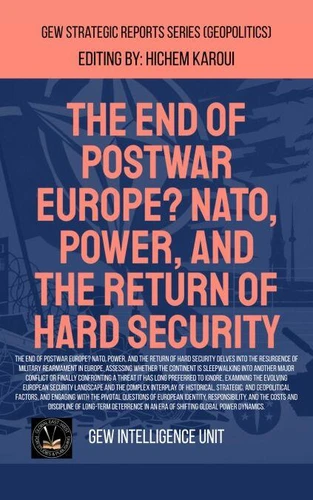
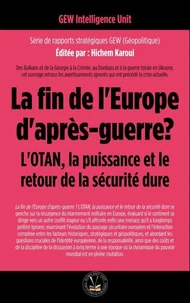
The End Of Postwar Europe? NATO, Power, And The Return Of Hard Security. Geopolitics
Par :Formats :
Disponible dans votre compte client Decitre ou Furet du Nord dès validation de votre commande. Le format ePub protégé est :
- Compatible avec une lecture sur My Vivlio (smartphone, tablette, ordinateur)
- Compatible avec une lecture sur liseuses Vivlio
- Pour les liseuses autres que Vivlio, vous devez utiliser le logiciel Adobe Digital Edition. Non compatible avec la lecture sur les liseuses Kindle, Remarkable et Sony
- Non compatible avec un achat hors France métropolitaine
 , qui est-ce ?
Notre partenaire de plateforme de lecture numérique où vous retrouverez l'ensemble de vos ebooks gratuitement
Pour en savoir plus sur nos ebooks, consultez notre aide en ligne ici
C'est si simple ! Lisez votre ebook avec l'app Vivlio sur votre tablette, mobile ou ordinateur :

- FormatePub
- ISBN8232923730
- EAN9798232923730
- Date de parution15/12/2025
- Protection num.Adobe DRM
- Infos supplémentairesepub
- ÉditeurDraft2Digital
Résumé
The End of Postwar Europe? NATO, Power, and the Return of Hard Security offers a structured, multi-part analysis of Europe's changing security landscape after the end of the post-Cold War order. Part I, "The Unravelling of the Post-Cold War Order", situates the war in Ukraine within a longer trajectory: the reset with Russia, the illusion of a "long holiday from history", and the neglected signals from the Balkans to Georgia, Crimea, and Donbas.
Part II, "A Continent Rearms", explores how European states are rebuilding their military capabilities: from Sweden and Finland abandoning neutrality to Germany's proclaimed Zeitenwende and the sharpening of NATO's Eastern Front. Part III, "Power, Politics, and Dependence", examines the transformed dynamics of transatlantic security: Europe's dense network of mutual dependence, debates about American reliability, and the EU's emergence as a security actor amid calls for "economies at war-readiness".
Part IV, "Futures for European Security", develops scenarios for Europe's strategic choices-containment, escalation, or cold peace; resilient democracies under strain; and Europe's potential roles as protector, client, or bystander in an increasingly multipolar system. Grounded in a broad literature review and contemporary strategic debates, this volume will be valuable for university courses in international relations, security studies, and European politics, as well as for analysts and practitioners seeking a comprehensive framework to understand Europe's re-entry into an age of hard security.
Part II, "A Continent Rearms", explores how European states are rebuilding their military capabilities: from Sweden and Finland abandoning neutrality to Germany's proclaimed Zeitenwende and the sharpening of NATO's Eastern Front. Part III, "Power, Politics, and Dependence", examines the transformed dynamics of transatlantic security: Europe's dense network of mutual dependence, debates about American reliability, and the EU's emergence as a security actor amid calls for "economies at war-readiness".
Part IV, "Futures for European Security", develops scenarios for Europe's strategic choices-containment, escalation, or cold peace; resilient democracies under strain; and Europe's potential roles as protector, client, or bystander in an increasingly multipolar system. Grounded in a broad literature review and contemporary strategic debates, this volume will be valuable for university courses in international relations, security studies, and European politics, as well as for analysts and practitioners seeking a comprehensive framework to understand Europe's re-entry into an age of hard security.