Gideon Hart is a nonfiction author who writes about leadership, philosophy, and the psychology of decision-making. His work explores how discipline, resilience, and long-term thinking shape both personal growth and success in times of uncertainty.
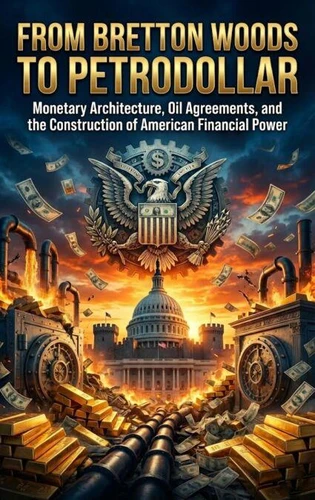
From Bretton Woods to Petrodollar. Monetary Architecture, Oil Agreements, and the Construction of American Financial Power
Par :Formats :
Disponible dans votre compte client Decitre ou Furet du Nord dès validation de votre commande. Le format ePub est :
- Compatible avec une lecture sur My Vivlio (smartphone, tablette, ordinateur)
- Compatible avec une lecture sur liseuses Vivlio
- Pour les liseuses autres que Vivlio, vous devez utiliser le logiciel Adobe Digital Edition. Non compatible avec la lecture sur les liseuses Kindle, Remarkable et Sony
 , qui est-ce ?
Notre partenaire de plateforme de lecture numérique où vous retrouverez l'ensemble de vos ebooks gratuitement
Pour en savoir plus sur nos ebooks, consultez notre aide en ligne ici
C'est si simple ! Lisez votre ebook avec l'app Vivlio sur votre tablette, mobile ou ordinateur :

- Nombre de pages160
- FormatePub
- ISBN978-3-565-27445-1
- EAN9783565274451
- Date de parution26/02/2026
- Protection num.pas de protection
- Taille2 Mo
- Infos supplémentairesepub
- ÉditeurEmphaloz Publishing House
Résumé
The dominance of the American dollar was never inevitable. It was engineered - first in a New Hampshire resort hotel in 1944, where forty-four nations agreed to anchor the postwar monetary order to a single currency, and then again in the early 1970s, when the collapse of gold convertibility threatened that dominance until a series of bilateral agreements with Saudi Arabia quietly replaced one foundation with another.
This book traces the full arc of dollar hegemony from the Bretton Woods conference through Nixon's 1971 suspension of gold convertibility and into the petrodollar arrangements that restructured global energy trade around American financial infrastructure.
Drawing on Treasury Department archives, Federal Reserve records, diplomatic cables, and the memoirs of key architects, it examines the deliberate institutional choices that transformed the dollar from a postwar convenience into the structural spine of the global economy. The analysis moves beyond monetary theory to reveal the geopolitical dimensions of currency power - how dollar dominance shaped alliance structures, constrained the sovereignty of debtor nations, and created the conditions under which American foreign policy could operate with a financial latitude unavailable to any other state.
It also examines the sustained challenges to that dominance, from the European monetary project to OPEC pricing experiments and the gradual emergence of alternative reserve currencies. For readers seeking to understand how money became an instrument of geopolitical power, this book offers a rigorously sourced account of the system's construction, its contradictions, and its enduring consequences.
Drawing on Treasury Department archives, Federal Reserve records, diplomatic cables, and the memoirs of key architects, it examines the deliberate institutional choices that transformed the dollar from a postwar convenience into the structural spine of the global economy. The analysis moves beyond monetary theory to reveal the geopolitical dimensions of currency power - how dollar dominance shaped alliance structures, constrained the sovereignty of debtor nations, and created the conditions under which American foreign policy could operate with a financial latitude unavailable to any other state.
It also examines the sustained challenges to that dominance, from the European monetary project to OPEC pricing experiments and the gradual emergence of alternative reserve currencies. For readers seeking to understand how money became an instrument of geopolitical power, this book offers a rigorously sourced account of the system's construction, its contradictions, and its enduring consequences.