A tech pioneer who balanced profit with principles in volatile markets, delivering self-help ethics training, business strategies for sustainable ventures, and histories of tech policy battles.
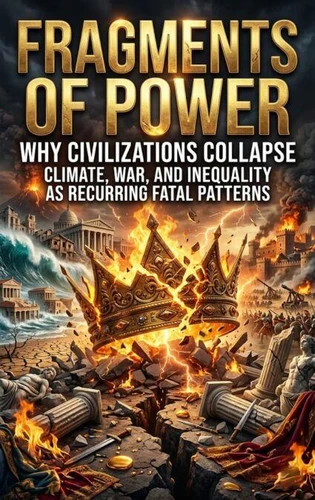
Fragments of Power. Why Civilizations Collapse Climate, War, and Inequality as Recurring Fatal Patterns
Par :Formats :
Disponible dans votre compte client Decitre ou Furet du Nord dès validation de votre commande. Le format ePub est :
- Compatible avec une lecture sur My Vivlio (smartphone, tablette, ordinateur)
- Compatible avec une lecture sur liseuses Vivlio
- Pour les liseuses autres que Vivlio, vous devez utiliser le logiciel Adobe Digital Edition. Non compatible avec la lecture sur les liseuses Kindle, Remarkable et Sony
 , qui est-ce ?
Notre partenaire de plateforme de lecture numérique où vous retrouverez l'ensemble de vos ebooks gratuitement
Pour en savoir plus sur nos ebooks, consultez notre aide en ligne ici
C'est si simple ! Lisez votre ebook avec l'app Vivlio sur votre tablette, mobile ou ordinateur :

- Nombre de pages163
- FormatePub
- ISBN978-3-565-46198-1
- EAN9783565461981
- Date de parution27/05/2026
- Protection num.pas de protection
- Taille2 Mo
- Infos supplémentairesepub
- ÉditeurEmphaloz Publishing House
Résumé
This book investigates how climate stress, warfare, and entrenched inequality repeatedly fracture the scaffolding of complex societies, tracing the quiet mechanisms that turn growth into breakdown across centuries and continents. Rather than searching for a single "cause" of collapse, it reads these fatal patterns as an intertwined feedback loop-where ecological strain amplifies social fissures, and war or crisis reshapes both land and hierarchy in ways that rarely reverse.
The first mechanism is environmental and climatic strain: historical cases such as the Akkadians, the Indus Valley, and the Maya show how shifts in rainfall, prolonged drought, or soil degradation erode the agricultural base that sustained cities and tribute systems, turning surpluses into scarcity within a few generations.
The second is warfare and external pressure, from invasions to prolonged border conflicts, which demand heavier taxation and militarization, deepening inequality and weakening the very institutions that must manage crisis. The third is institutional rigidity and social stratification, where elites, insulated from the worst effects, often resist reform, leaving states unable to adapt to new ecological or political realities even when warning signs accumulate.
The second is warfare and external pressure, from invasions to prolonged border conflicts, which demand heavier taxation and militarization, deepening inequality and weakening the very institutions that must manage crisis. The third is institutional rigidity and social stratification, where elites, insulated from the worst effects, often resist reform, leaving states unable to adapt to new ecological or political realities even when warning signs accumulate.