A tech pioneer who balanced profit with principles in volatile markets, delivering self-help ethics training, business strategies for sustainable ventures, and histories of tech policy battles.
Nouveauté
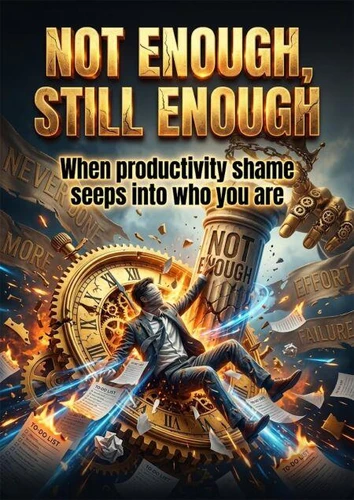
Not enough, still enough. When productivity shame seeps into who you are
Par :Formats :
Disponible dans votre compte client Decitre ou Furet du Nord dès validation de votre commande. Le format ePub est :
- Compatible avec une lecture sur My Vivlio (smartphone, tablette, ordinateur)
- Compatible avec une lecture sur liseuses Vivlio
- Pour les liseuses autres que Vivlio, vous devez utiliser le logiciel Adobe Digital Edition. Non compatible avec la lecture sur les liseuses Kindle, Remarkable et Sony
 , qui est-ce ?
Notre partenaire de plateforme de lecture numérique où vous retrouverez l'ensemble de vos ebooks gratuitement
Pour en savoir plus sur nos ebooks, consultez notre aide en ligne ici
C'est si simple ! Lisez votre ebook avec l'app Vivlio sur votre tablette, mobile ou ordinateur :

- Nombre de pages184
- FormatePub
- ISBN978-3-565-58908-1
- EAN9783565589081
- Date de parution26/07/2026
- Protection num.pas de protection
- Taille1 Mo
- Infos supplémentairesepub
- ÉditeurEmphaloz Publishing House
Résumé
You finished the task. But the feeling didn't lift. Instead, a quiet voice whispers: *it should have been faster, better, more.* This is the echo of productivity shame-a guilt that turns doing into a measure of worth. You are not alone in lying awake wondering why rest feels like failure.
Productivity shame isn't about laziness. It's a cycle where self-judgment tightens every time you fall short of an invisible standard.
You set a goal, miss it, feel shame, then push harder-until exhaustion forces you to stop. This book doesn't offer a system to *fix* you. It invites you to notice the guilt cycle without fighting it. What happens when you stop measuring yourself against an endless to-do list? When you see that underperformance is not a character flaw but a human signal? This is not about doing less. It's about recognizing that your worth was never tied to output.
The shift begins in understanding, not in productivity hacks.
You set a goal, miss it, feel shame, then push harder-until exhaustion forces you to stop. This book doesn't offer a system to *fix* you. It invites you to notice the guilt cycle without fighting it. What happens when you stop measuring yourself against an endless to-do list? When you see that underperformance is not a character flaw but a human signal? This is not about doing less. It's about recognizing that your worth was never tied to output.
The shift begins in understanding, not in productivity hacks.