Explores migration, urban culture, and overlooked communities in American history.
Nouveauté
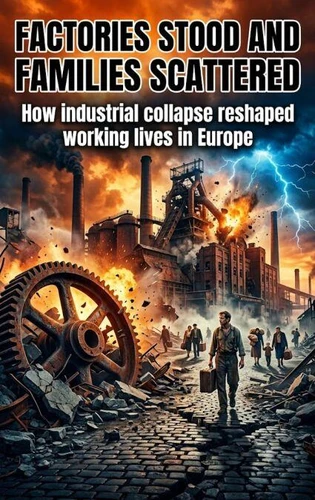
Factories stood and families scattered. How industrial collapse reshaped working lives in Europe
Par :Formats :
Disponible dans votre compte client Decitre ou Furet du Nord dès validation de votre commande. Le format ePub est :
- Compatible avec une lecture sur My Vivlio (smartphone, tablette, ordinateur)
- Compatible avec une lecture sur liseuses Vivlio
- Pour les liseuses autres que Vivlio, vous devez utiliser le logiciel Adobe Digital Edition. Non compatible avec la lecture sur les liseuses Kindle, Remarkable et Sony
 , qui est-ce ?
Notre partenaire de plateforme de lecture numérique où vous retrouverez l'ensemble de vos ebooks gratuitement
Pour en savoir plus sur nos ebooks, consultez notre aide en ligne ici
C'est si simple ! Lisez votre ebook avec l'app Vivlio sur votre tablette, mobile ou ordinateur :

- Nombre de pages204
- FormatePub
- ISBN978-3-565-54586-5
- EAN9783565545865
- Date de parution08/07/2026
- Protection num.pas de protection
- Taille665 Ko
- Infos supplémentairesepub
- ÉditeurEmphaloz Publishing House
Résumé
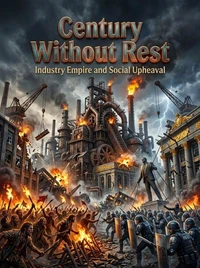
The steam engine did not only drive pistons. It drove families into mill towns, children into coal shafts, and entire regions into dependency on a single mine or loom. This book traces the Industrial Revolution not through patents and production figures, but through the bodies that made them possible. From the Lancashire cotton mills to the Ruhr coal fields, it examines how technology restructured daily life faster than any government could respond.
Labor became a commodity measured in output per hour. Communities became labor pools. The machine set the pace, and the human body tried to keep up. What broke first was not the equipment. What broke was the assumption that progress and human welfare moved together. The book follows the emergence of labor organization, factory legislation, and the slow recognition that industrial society required new forms of protection.
It also considers what was lost: craft knowledge, local autonomy, seasonal rhythms. The transformation was not simply economic. It was a remaking of what it meant to be productive, to be useful, to be alive. By the time the factories fell silent in the twentieth century's economic crises, the world had become something the eighteenth century could not have imagined.
Labor became a commodity measured in output per hour. Communities became labor pools. The machine set the pace, and the human body tried to keep up. What broke first was not the equipment. What broke was the assumption that progress and human welfare moved together. The book follows the emergence of labor organization, factory legislation, and the slow recognition that industrial society required new forms of protection.
It also considers what was lost: craft knowledge, local autonomy, seasonal rhythms. The transformation was not simply economic. It was a remaking of what it meant to be productive, to be useful, to be alive. By the time the factories fell silent in the twentieth century's economic crises, the world had become something the eighteenth century could not have imagined.