Explores migration, urban culture, and overlooked communities in American history.
Nouveauté
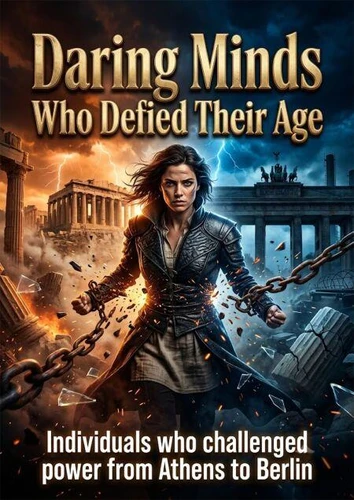
Daring Minds Who Defied Their Age. Individuals who challenged power from Athens to Berlin
Par :Formats :
Disponible dans votre compte client Decitre ou Furet du Nord dès validation de votre commande. Le format ePub est :
- Compatible avec une lecture sur My Vivlio (smartphone, tablette, ordinateur)
- Compatible avec une lecture sur liseuses Vivlio
- Pour les liseuses autres que Vivlio, vous devez utiliser le logiciel Adobe Digital Edition. Non compatible avec la lecture sur les liseuses Kindle, Remarkable et Sony
 , qui est-ce ?
Notre partenaire de plateforme de lecture numérique où vous retrouverez l'ensemble de vos ebooks gratuitement
Pour en savoir plus sur nos ebooks, consultez notre aide en ligne ici
C'est si simple ! Lisez votre ebook avec l'app Vivlio sur votre tablette, mobile ou ordinateur :

- Nombre de pages214
- FormatePub
- ISBN978-3-565-59274-6
- EAN9783565592746
- Date de parution27/07/2026
- Protection num.pas de protection
- Taille1 Mo
- Infos supplémentairesepub
- ÉditeurEmphaloz Publishing House
Résumé
Every era has its heretics-those who refused to think as they were told. This book follows a lineage of radical thinkers who stood against the dominant systems of their age, from Socrates and Diogenes to Simone de Beauvoir and Hannah Arendt. Each chapter examines a moment when philosophical courage met political repression: the trial of Socrates, the exile of Ovid, the burning of Giordano Bruno, the imprisonment of Gramsci.
The narrative reveals how these thinkers were not isolated geniuses, but products of specific historical pressures-empire, church, state, and market. Their ideas were forged in resistance, and their legacy is not a system of thought, but a way of being in opposition. The book traces the thread from ancient Cynicism through medieval mysticism, from Spinoza's excommunication to the Frankfurt School's flight from fascism.
It ends with the 20th century's dissidents-Solzhenitsyn, Havel, Arendt-showing how the act of thinking against power remains the most dangerous and necessary human activity.
The narrative reveals how these thinkers were not isolated geniuses, but products of specific historical pressures-empire, church, state, and market. Their ideas were forged in resistance, and their legacy is not a system of thought, but a way of being in opposition. The book traces the thread from ancient Cynicism through medieval mysticism, from Spinoza's excommunication to the Frankfurt School's flight from fascism.
It ends with the 20th century's dissidents-Solzhenitsyn, Havel, Arendt-showing how the act of thinking against power remains the most dangerous and necessary human activity.