SOLDES
Jusqu'à -70% sur une sélection d'articles*

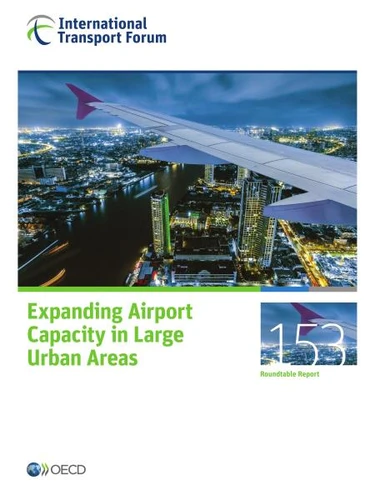
Expanding Airport Capacity in Large Urban Areas
Par :Formats :
Disponible dans votre compte client Decitre ou Furet du Nord dès validation de votre commande. Le format PDF est :
- Compatible avec une lecture sur My Vivlio (smartphone, tablette, ordinateur)
- Compatible avec une lecture sur liseuses Vivlio
- Pour les liseuses autres que Vivlio, vous devez utiliser le logiciel Adobe Digital Edition. Non compatible avec la lecture sur les liseuses Kindle, Remarkable et Sony
 , qui est-ce ?
Notre partenaire de plateforme de lecture numérique où vous retrouverez l'ensemble de vos ebooks gratuitement
Pour en savoir plus sur nos ebooks, consultez notre aide en ligne ici
C'est si simple ! Lisez votre ebook avec l'app Vivlio sur votre tablette, mobile ou ordinateur :

- Nombre de pages160
- FormatPDF
- ISBN978-92-821-0739-3
- EAN9789282107393
- Date de parution15/04/2014
- Protection num.Digital Watermarking
- Taille6 Mo
- Infos supplémentairespdf
- ÉditeurOECD
Résumé
Expanding airport capacity in large metropolitan areas is difficult. Community agreements on noise constrain growth at existing airports. Land prices can be prohibitive for relocating airports. Most new sites require extensive investment in surface transport links to city centres. In multi-airport regions, options for expansion at the airports are to an extent interdependent, complicating assessment of whether to build new runways.
Many major airports are hubs for network carriers at the same time as serving a large local market. The complementarity between these functions may be a prerequisite for viable network operations, suggesting that distributing services over multiple airports instead of expanding the main hub would be costly. Hub airports and their network carriers often compete with hubs in neighbouring regions. The strategies of network carriers and potential new entrants to this part of the market need to be taken into account in assessing future demand for airport capacity.
The requirements of low cost and other point-to-point carriers are equally important, but different. This report reviews international experience in reconciling planning and environmental constraints with demand for airport capacity and the potential benefits in terms of productivity and growth from developing international airline services. Experience is compared in London, New York, Tokyo, Osaka, Sydney and in Germany's main airports with particular attention to the dynamics of airline markets and implications for airport planning in multi-airport cities.
Many major airports are hubs for network carriers at the same time as serving a large local market. The complementarity between these functions may be a prerequisite for viable network operations, suggesting that distributing services over multiple airports instead of expanding the main hub would be costly. Hub airports and their network carriers often compete with hubs in neighbouring regions. The strategies of network carriers and potential new entrants to this part of the market need to be taken into account in assessing future demand for airport capacity.
The requirements of low cost and other point-to-point carriers are equally important, but different. This report reviews international experience in reconciling planning and environmental constraints with demand for airport capacity and the potential benefits in terms of productivity and growth from developing international airline services. Experience is compared in London, New York, Tokyo, Osaka, Sydney and in Germany's main airports with particular attention to the dynamics of airline markets and implications for airport planning in multi-airport cities.
A propos de OCDE


32,99 €

72,99 €

33,99 €


32,99 €

32,99 €

32,00 €

Tax compilance by design
E-book
16,00 €

16,00 €

19,00 €

16,00 €

25,00 €


23,00 €

Women in business 2014
E-book
31,00 €

