
Nouveauté
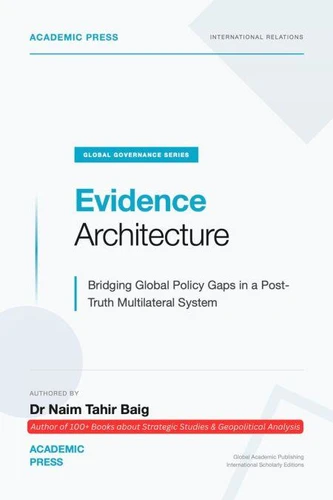
Evidence Architecture: Bridging Global Policy Gaps in a Post - Truth Multilateral System
Par :Formats :
Disponible dans votre compte client Decitre ou Furet du Nord dès validation de votre commande. Le format ePub est :
- Compatible avec une lecture sur My Vivlio (smartphone, tablette, ordinateur)
- Compatible avec une lecture sur liseuses Vivlio
- Pour les liseuses autres que Vivlio, vous devez utiliser le logiciel Adobe Digital Edition. Non compatible avec la lecture sur les liseuses Kindle, Remarkable et Sony
 , qui est-ce ?
Notre partenaire de plateforme de lecture numérique où vous retrouverez l'ensemble de vos ebooks gratuitement
Pour en savoir plus sur nos ebooks, consultez notre aide en ligne ici
C'est si simple ! Lisez votre ebook avec l'app Vivlio sur votre tablette, mobile ou ordinateur :

- FormatePub
- ISBN8232262518
- EAN9798232262518
- Date de parution07/12/2025
- Protection num.pas de protection
- Infos supplémentairesepub
- ÉditeurDraft2Digital
Résumé
Book DescriptionEvidence Architecture: Bridging Global Policy Gaps in a Post-Truth Multilateral SystemIn an era when disinformation spreads faster than truth and institutional trust continues its precipitous decline, the capacity of multilateral organizations to govern effectively faces an existential crisis. Evidence Architecture: Bridging Global Policy Gaps in a Post-Truth Multilateral System presents a comprehensive analysis of how systematic infrastructure for evidence synthesis and dissemination can restore credibility to global governance in the 21st century.
Dr. Naim Tahir Baig's groundbreaking work examines the widening chasm between evidence production and policy utilization in international institutions-from the paralysis of UN climate negotiations despite overwhelming scientific consensus, to the collapse of the WTO dispute settlement mechanism, to the WHO's credibility crisis during the COVID-19 pandemic. Drawing on extensive research from the Global Evidence Commission, the UK Research and Innovation's METIUS initiative, and the Evidence Synthesis Infrastructure Collaborative (ESIC), this book introduces "evidence architecture" as a framework for building shared data ecosystems that transcend political boundaries and epistemic divides.
The book's twelve chapters move systematically from diagnosis to prescription. Part I establishes the conceptual foundations, tracing the evolution of evidence-based policymaking from medical randomized controlled trials to contested applications in social policy, while examining how post-truth politics and weaponized disinformation undermine the very possibility of shared factual baselines. Part II provides penetrating case studies of institutional failure across the UN system, World Trade Organization, and global health governance, revealing how consensus-based decision-making and information fragmentation produce lowest-common-denominator outcomes that fail to match the scale of contemporary challenges.
Part III offers reasons for cautious optimism, analyzing emerging solutions including the $126 million ESIC initiative to build AI-powered evidence synthesis infrastructure, the promise and perils of machine learning for evidence production, and the rise of regional evidence hubs enabling South-South cooperation. The final section provides practical guidance for designing national evidence-support systems and reforming multilateral institutions, presenting concrete proposals such as networked secretariats connecting UN, World Bank, IMF, WTO, and ILO evidence functions.
This book is essential reading for graduate students in international relations and public policy, policymakers at national and international levels, staff of multilateral organizations and think tanks, researchers in science and technology studies, and anyone concerned with how evidence can inform governance in a fractured world. It provides not only rigorous analysis but also actionable insights for those working to build the institutional foundations necessary for addressing humanity's shared challenges.
As Dr. Baig demonstrates with compelling clarity, the choice before us is not between evidence-based and politically legitimate governance-it is between constructing robust evidence architecture that enhances democratic decision-making and surrendering to information chaos that makes effective collective action impossible. The stakes could not be higher, and the time for building cannot wait.
Dr. Naim Tahir Baig's groundbreaking work examines the widening chasm between evidence production and policy utilization in international institutions-from the paralysis of UN climate negotiations despite overwhelming scientific consensus, to the collapse of the WTO dispute settlement mechanism, to the WHO's credibility crisis during the COVID-19 pandemic. Drawing on extensive research from the Global Evidence Commission, the UK Research and Innovation's METIUS initiative, and the Evidence Synthesis Infrastructure Collaborative (ESIC), this book introduces "evidence architecture" as a framework for building shared data ecosystems that transcend political boundaries and epistemic divides.
The book's twelve chapters move systematically from diagnosis to prescription. Part I establishes the conceptual foundations, tracing the evolution of evidence-based policymaking from medical randomized controlled trials to contested applications in social policy, while examining how post-truth politics and weaponized disinformation undermine the very possibility of shared factual baselines. Part II provides penetrating case studies of institutional failure across the UN system, World Trade Organization, and global health governance, revealing how consensus-based decision-making and information fragmentation produce lowest-common-denominator outcomes that fail to match the scale of contemporary challenges.
Part III offers reasons for cautious optimism, analyzing emerging solutions including the $126 million ESIC initiative to build AI-powered evidence synthesis infrastructure, the promise and perils of machine learning for evidence production, and the rise of regional evidence hubs enabling South-South cooperation. The final section provides practical guidance for designing national evidence-support systems and reforming multilateral institutions, presenting concrete proposals such as networked secretariats connecting UN, World Bank, IMF, WTO, and ILO evidence functions.
This book is essential reading for graduate students in international relations and public policy, policymakers at national and international levels, staff of multilateral organizations and think tanks, researchers in science and technology studies, and anyone concerned with how evidence can inform governance in a fractured world. It provides not only rigorous analysis but also actionable insights for those working to build the institutional foundations necessary for addressing humanity's shared challenges.
As Dr. Baig demonstrates with compelling clarity, the choice before us is not between evidence-based and politically legitimate governance-it is between constructing robust evidence architecture that enhances democratic decision-making and surrendering to information chaos that makes effective collective action impossible. The stakes could not be higher, and the time for building cannot wait.
Book DescriptionEvidence Architecture: Bridging Global Policy Gaps in a Post-Truth Multilateral SystemIn an era when disinformation spreads faster than truth and institutional trust continues its precipitous decline, the capacity of multilateral organizations to govern effectively faces an existential crisis. Evidence Architecture: Bridging Global Policy Gaps in a Post-Truth Multilateral System presents a comprehensive analysis of how systematic infrastructure for evidence synthesis and dissemination can restore credibility to global governance in the 21st century.
Dr. Naim Tahir Baig's groundbreaking work examines the widening chasm between evidence production and policy utilization in international institutions-from the paralysis of UN climate negotiations despite overwhelming scientific consensus, to the collapse of the WTO dispute settlement mechanism, to the WHO's credibility crisis during the COVID-19 pandemic. Drawing on extensive research from the Global Evidence Commission, the UK Research and Innovation's METIUS initiative, and the Evidence Synthesis Infrastructure Collaborative (ESIC), this book introduces "evidence architecture" as a framework for building shared data ecosystems that transcend political boundaries and epistemic divides.
The book's twelve chapters move systematically from diagnosis to prescription. Part I establishes the conceptual foundations, tracing the evolution of evidence-based policymaking from medical randomized controlled trials to contested applications in social policy, while examining how post-truth politics and weaponized disinformation undermine the very possibility of shared factual baselines. Part II provides penetrating case studies of institutional failure across the UN system, World Trade Organization, and global health governance, revealing how consensus-based decision-making and information fragmentation produce lowest-common-denominator outcomes that fail to match the scale of contemporary challenges.
Part III offers reasons for cautious optimism, analyzing emerging solutions including the $126 million ESIC initiative to build AI-powered evidence synthesis infrastructure, the promise and perils of machine learning for evidence production, and the rise of regional evidence hubs enabling South-South cooperation. The final section provides practical guidance for designing national evidence-support systems and reforming multilateral institutions, presenting concrete proposals such as networked secretariats connecting UN, World Bank, IMF, WTO, and ILO evidence functions.
This book is essential reading for graduate students in international relations and public policy, policymakers at national and international levels, staff of multilateral organizations and think tanks, researchers in science and technology studies, and anyone concerned with how evidence can inform governance in a fractured world. It provides not only rigorous analysis but also actionable insights for those working to build the institutional foundations necessary for addressing humanity's shared challenges.
As Dr. Baig demonstrates with compelling clarity, the choice before us is not between evidence-based and politically legitimate governance-it is between constructing robust evidence architecture that enhances democratic decision-making and surrendering to information chaos that makes effective collective action impossible. The stakes could not be higher, and the time for building cannot wait.
Dr. Naim Tahir Baig's groundbreaking work examines the widening chasm between evidence production and policy utilization in international institutions-from the paralysis of UN climate negotiations despite overwhelming scientific consensus, to the collapse of the WTO dispute settlement mechanism, to the WHO's credibility crisis during the COVID-19 pandemic. Drawing on extensive research from the Global Evidence Commission, the UK Research and Innovation's METIUS initiative, and the Evidence Synthesis Infrastructure Collaborative (ESIC), this book introduces "evidence architecture" as a framework for building shared data ecosystems that transcend political boundaries and epistemic divides.
The book's twelve chapters move systematically from diagnosis to prescription. Part I establishes the conceptual foundations, tracing the evolution of evidence-based policymaking from medical randomized controlled trials to contested applications in social policy, while examining how post-truth politics and weaponized disinformation undermine the very possibility of shared factual baselines. Part II provides penetrating case studies of institutional failure across the UN system, World Trade Organization, and global health governance, revealing how consensus-based decision-making and information fragmentation produce lowest-common-denominator outcomes that fail to match the scale of contemporary challenges.
Part III offers reasons for cautious optimism, analyzing emerging solutions including the $126 million ESIC initiative to build AI-powered evidence synthesis infrastructure, the promise and perils of machine learning for evidence production, and the rise of regional evidence hubs enabling South-South cooperation. The final section provides practical guidance for designing national evidence-support systems and reforming multilateral institutions, presenting concrete proposals such as networked secretariats connecting UN, World Bank, IMF, WTO, and ILO evidence functions.
This book is essential reading for graduate students in international relations and public policy, policymakers at national and international levels, staff of multilateral organizations and think tanks, researchers in science and technology studies, and anyone concerned with how evidence can inform governance in a fractured world. It provides not only rigorous analysis but also actionable insights for those working to build the institutional foundations necessary for addressing humanity's shared challenges.
As Dr. Baig demonstrates with compelling clarity, the choice before us is not between evidence-based and politically legitimate governance-it is between constructing robust evidence architecture that enhances democratic decision-making and surrendering to information chaos that makes effective collective action impossible. The stakes could not be higher, and the time for building cannot wait.
A propos de Dr Naim Tahir Baig


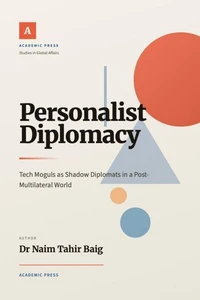
Personalist Diplomacy
E-book
8,99 €


8,99 €
8,99 €

Culture Wars in 2025
E-book
8,99 €

8,99 €


8,99 €
8,99 €
8,99 €
Sudan in Flames
E-book
8,99 €

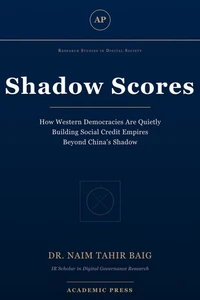
Shadow Scores
E-book
8,99 €

خاکسارِ محبت
E-book
8,99 €