Focuses on entrepreneurship, branding, and creator-driven business models with a modern strategic perspective.
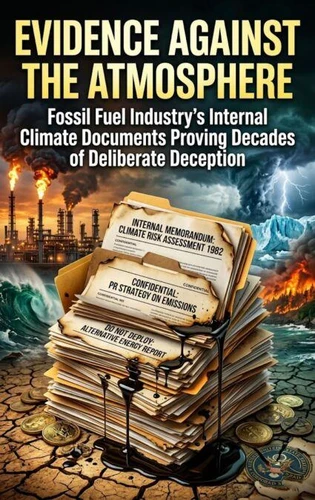
Evidence Against the Atmosphere. Fossil Fuel Industry's Internal Climate Documents Proving Decades of Deliberate Deception
Par :Formats :
Disponible dans votre compte client Decitre ou Furet du Nord dès validation de votre commande. Le format ePub est :
- Compatible avec une lecture sur My Vivlio (smartphone, tablette, ordinateur)
- Compatible avec une lecture sur liseuses Vivlio
- Pour les liseuses autres que Vivlio, vous devez utiliser le logiciel Adobe Digital Edition. Non compatible avec la lecture sur les liseuses Kindle, Remarkable et Sony
 , qui est-ce ?
Notre partenaire de plateforme de lecture numérique où vous retrouverez l'ensemble de vos ebooks gratuitement
Pour en savoir plus sur nos ebooks, consultez notre aide en ligne ici
C'est si simple ! Lisez votre ebook avec l'app Vivlio sur votre tablette, mobile ou ordinateur :

- Nombre de pages172
- FormatePub
- ISBN978-3-565-45208-8
- EAN9783565452088
- Date de parution21/05/2026
- Protection num.pas de protection
- Taille2 Mo
- Infos supplémentairesepub
- ÉditeurEmphaloz Publishing House
Résumé
This book examines how the fossil fuel sector converted scientific foresight into a sustained program of public distortion, not through accident or denial alone, but through coordinated relationships between corporate leadership, trade associations, front groups, and public messaging operations designed to delay climate accountability.
Three mechanisms define the deception architecture. First, internal memos and strategy documents reveal that major energy companies understood for decades that fossil fuel combustion would intensify global warming, yet chose to suppress, minimize, or strategically reframe that knowledge rather than disclose it transparently to regulators, investors, or the public.
Second, the industry's reliance on trade associations, proxy experts, and seemingly independent advocacy campaigns created a distributed credibility network that allowed corporate messaging to circulate through multiple institutional identities.
This structure reduced direct traceability while preserving political influence and public legitimacy. Third, the transition from overt climate denial toward greenwashing and carefully branded "solutions" demonstrates how the industry adapted its communication strategy as scientific evidence became harder to dispute. Rather than abandoning obstructive behavior, corporations increasingly reframed themselves as participants in climate action while continuing to shape policy discussions in ways that protected existing economic interests.
This structure reduced direct traceability while preserving political influence and public legitimacy. Third, the transition from overt climate denial toward greenwashing and carefully branded "solutions" demonstrates how the industry adapted its communication strategy as scientific evidence became harder to dispute. Rather than abandoning obstructive behavior, corporations increasingly reframed themselves as participants in climate action while continuing to shape policy discussions in ways that protected existing economic interests.