SOLDES
Jusqu'à -70% sur une sélection d'articles*

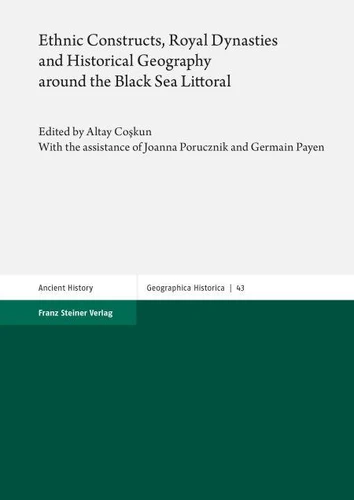
Ethnic Constructs, Royal Dynasties and Historical Geography around the Black Sea Littoral
Par : , ,Formats :
Disponible dans votre compte client Decitre ou Furet du Nord dès validation de votre commande. Le format PDF est :
- Compatible avec une lecture sur My Vivlio (smartphone, tablette, ordinateur)
- Compatible avec une lecture sur liseuses Vivlio
- Pour les liseuses autres que Vivlio, vous devez utiliser le logiciel Adobe Digital Edition. Non compatible avec la lecture sur les liseuses Kindle, Remarkable et Sony
 , qui est-ce ?
Notre partenaire de plateforme de lecture numérique où vous retrouverez l'ensemble de vos ebooks gratuitement
Pour en savoir plus sur nos ebooks, consultez notre aide en ligne ici
C'est si simple ! Lisez votre ebook avec l'app Vivlio sur votre tablette, mobile ou ordinateur :

- Nombre de pages381
- FormatPDF
- ISBN978-3-515-12944-2
- EAN9783515129442
- Date de parution04/12/2020
- Protection num.Digital Watermarking
- Taille19 Mo
- Infos supplémentairespdf
- ÉditeurFranz Steiner
Résumé
Ethnicity is a social construct within an ideological framework, ancient or modern. This wisdom has penetrated most scholarly disciplines, but its reception is delayed in Black Sea studies, where essentialist views still prevail. Nationalism, Rostovtzeff's culture-history and Marxist-Leninist materialism have cast longer shadows on this part of the ancient world. Likewise, the balance between documentary sources and ancient literature needs redressing.
The latter has often been either accepted in a positivist manner or rejected due to perceived inconsistencies. More rewarding is to try to understand what exactly the ancient authors knew or intended. In this light, the contributors discuss the concept of Sarmatization, the implications of rural versus urban cults, ethnic hierarchies, interaction patterns in colonial settings, inversions of barbarian stereotypes, cultural affiliations of Bosporan kings, imperial policies of Pharnakes I and II, foreign princes on the Ara Pacis Augustae, the reorganization of Pontos under Pompey and Deiotaros, the sanctuary of Leukothea in Kolchis, Christian urbanism in Scythia Minor and crop selections of Anatolian farmers.
Though selective, the e-book covers the four coastlines of the Black Sea, ranging from the archaic to the Byzantine periods.
The latter has often been either accepted in a positivist manner or rejected due to perceived inconsistencies. More rewarding is to try to understand what exactly the ancient authors knew or intended. In this light, the contributors discuss the concept of Sarmatization, the implications of rural versus urban cults, ethnic hierarchies, interaction patterns in colonial settings, inversions of barbarian stereotypes, cultural affiliations of Bosporan kings, imperial policies of Pharnakes I and II, foreign princes on the Ara Pacis Augustae, the reorganization of Pontos under Pompey and Deiotaros, the sanctuary of Leukothea in Kolchis, Christian urbanism in Scythia Minor and crop selections of Anatolian farmers.
Though selective, the e-book covers the four coastlines of the Black Sea, ranging from the archaic to the Byzantine periods.