SOLDES
Jusqu'à -70% sur une sélection d'articles*

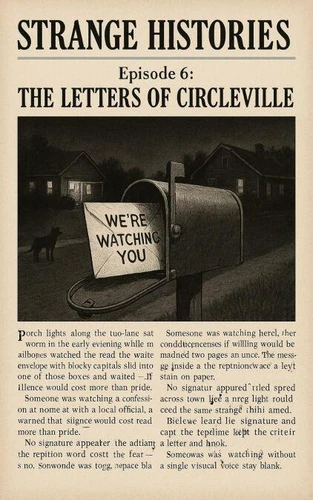
Episode 6: The Letters of Circleville. Last Seen Casefile Anomalies, #6
Par :Formats :
Disponible dans votre compte client Decitre ou Furet du Nord dès validation de votre commande. Le format ePub est :
- Compatible avec une lecture sur My Vivlio (smartphone, tablette, ordinateur)
- Compatible avec une lecture sur liseuses Vivlio
- Pour les liseuses autres que Vivlio, vous devez utiliser le logiciel Adobe Digital Edition. Non compatible avec la lecture sur les liseuses Kindle, Remarkable et Sony
 , qui est-ce ?
Notre partenaire de plateforme de lecture numérique où vous retrouverez l'ensemble de vos ebooks gratuitement
Pour en savoir plus sur nos ebooks, consultez notre aide en ligne ici
C'est si simple ! Lisez votre ebook avec l'app Vivlio sur votre tablette, mobile ou ordinateur :

- FormatePub
- ISBN8235740013
- EAN9798235740013
- Date de parution25/04/2026
- Protection num.pas de protection
- Infos supplémentairesepub
- ÉditeurIoakim Ioakim
Résumé
Circleville, Ohio. Late 1970s. A series of anonymous letters begins arriving in mailboxes across a small town. They accuse. They threaten. They claim knowledge that should not exist. At first, the letters target a school bus driver and her family. Then they spread-reaching neighbors, officials, and anyone connected to the accusations. The handwriting is always the same: block capitals, deliberate, controlled, and relentless.
The tone never changes. The pressure builds. When roadside signs appear and a booby-trapped device is discovered, the case escalates from harassment to attempted violence. A suspect is identified, charged, and convicted. The case should end. It doesn't. The letters continue. Postmarked from different locations. Timed in ways that challenge custody. Containing details not yet made public. Maintaining the same voice, the same rhythm, the same control.
The Letters of Circleville reconstructs the case through documented evidence, court records, postal patterns, and linguistic analysis. It separates verifiable facts from public narrative, focusing on what can be measured across years of sustained activity. The result is not a story of a single crime. It is a case about control, repetition, and the persistence of a voice that was never fully identified.
The tone never changes. The pressure builds. When roadside signs appear and a booby-trapped device is discovered, the case escalates from harassment to attempted violence. A suspect is identified, charged, and convicted. The case should end. It doesn't. The letters continue. Postmarked from different locations. Timed in ways that challenge custody. Containing details not yet made public. Maintaining the same voice, the same rhythm, the same control.
The Letters of Circleville reconstructs the case through documented evidence, court records, postal patterns, and linguistic analysis. It separates verifiable facts from public narrative, focusing on what can be measured across years of sustained activity. The result is not a story of a single crime. It is a case about control, repetition, and the persistence of a voice that was never fully identified.
A propos de K.G. Groves

3,99 €
The Tent in the Rain
E-book
4,49 €
Where Is Your Chain?
E-book
3,49 €
5,49 €

I AM The Gate
E-book
5,49 €