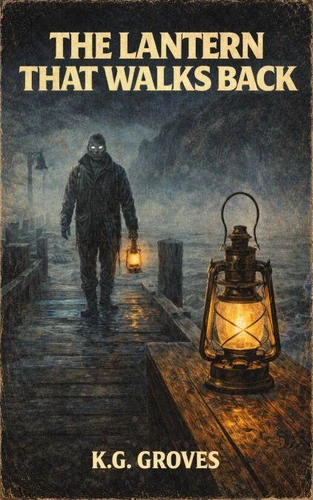
Newfoundland. 1978. Fisherman James Pike ties his skiff to the Breakwater at dusk beneath a cold Atlantic sky and disappears before morning without a splash, a struggle, or a single footprint leaving the dock. His lantern keeps burning. The Coast Guard blames the sea. His brother Eli knows better. The night James vanished was calm enough to hear gulls breathing over Trinity Bay. Yet witnesses swear the lantern moved on its own-three slow steps toward the cliff, then back again, glowing steadily against the fog.
Weeks later, fishermen begin hearing the dock bell ring at exactly 2:17 a.m. Then James comes walking out of the tide. His boots are on the wrong feet. His skin glistens like wet scales. And the lantern follows him like a living thing. Each night the light drifts closer to the cliff edge, leading men toward the sea while James whispers the same phrase through milk-white eyes:One more haul. As disappearances spread along the coast and the lantern continues pacing the Breakwater through the fog, Eli realizes the horror waiting offshore is not a ghost.
It is something that learned how to fish people back from the water. The Lantern That Walks Back is a slow-burning dread novella about grief, the Atlantic's ancient pull, inherited ritual, and the terrifying possibility that the sea remembers everyone it takes. Filled with foghorn echoes, salt-soaked docks, drifting lantern light, and endless black water, it blends maritime folk horror with supernatural coastal dread.
Some lights guide sailors home. Others lead them back into the deep.
Newfoundland. 1978. Fisherman James Pike ties his skiff to the Breakwater at dusk beneath a cold Atlantic sky and disappears before morning without a splash, a struggle, or a single footprint leaving the dock. His lantern keeps burning. The Coast Guard blames the sea. His brother Eli knows better. The night James vanished was calm enough to hear gulls breathing over Trinity Bay. Yet witnesses swear the lantern moved on its own-three slow steps toward the cliff, then back again, glowing steadily against the fog.
Weeks later, fishermen begin hearing the dock bell ring at exactly 2:17 a.m. Then James comes walking out of the tide. His boots are on the wrong feet. His skin glistens like wet scales. And the lantern follows him like a living thing. Each night the light drifts closer to the cliff edge, leading men toward the sea while James whispers the same phrase through milk-white eyes:One more haul. As disappearances spread along the coast and the lantern continues pacing the Breakwater through the fog, Eli realizes the horror waiting offshore is not a ghost.
It is something that learned how to fish people back from the water. The Lantern That Walks Back is a slow-burning dread novella about grief, the Atlantic's ancient pull, inherited ritual, and the terrifying possibility that the sea remembers everyone it takes. Filled with foghorn echoes, salt-soaked docks, drifting lantern light, and endless black water, it blends maritime folk horror with supernatural coastal dread.
Some lights guide sailors home. Others lead them back into the deep.

 , qui est-ce ?