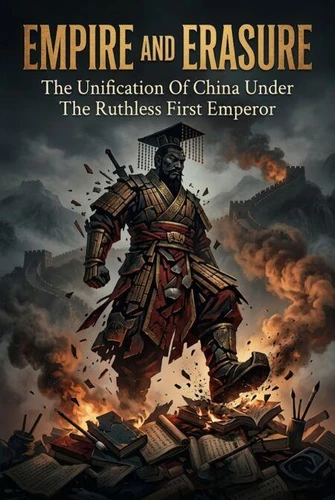
Empire and Erasure. The Unification Of China Under The Ruthless First Emperor
Par :Formats :
Disponible dans votre compte client Decitre ou Furet du Nord dès validation de votre commande. Le format ePub est :
- Compatible avec une lecture sur My Vivlio (smartphone, tablette, ordinateur)
- Compatible avec une lecture sur liseuses Vivlio
- Pour les liseuses autres que Vivlio, vous devez utiliser le logiciel Adobe Digital Edition. Non compatible avec la lecture sur les liseuses Kindle, Remarkable et Sony
 , qui est-ce ?
Notre partenaire de plateforme de lecture numérique où vous retrouverez l'ensemble de vos ebooks gratuitement
Pour en savoir plus sur nos ebooks, consultez notre aide en ligne ici
C'est si simple ! Lisez votre ebook avec l'app Vivlio sur votre tablette, mobile ou ordinateur :

- Nombre de pages226
- FormatePub
- ISBN978-3-565-43121-2
- EAN9783565431212
- Date de parution29/04/2026
- Protection num.pas de protection
- Taille1 Mo
- Infos supplémentairesepub
- ÉditeurEmphaloz Publishing House
Résumé
The sweeping consolidation of the Warring States fundamentally transformed the political and cultural landscape of East Asia. This comprehensive historical account explores the intricate administrative reforms, monumental engineering projects, and systemic ideological suppression that characterized the dawn of the Qin dynasty. Moving beyond simplified narratives of absolute tyranny, the text examines the nuanced realities of centralized bureaucracy, legalist philosophy, and the profound human cost of unprecedented territorial integration.
Relying on primary archaeological excavations, classical bureaucratic records, and surviving historical chronicles, the narrative carefully deconstructs the mechanisms of regional subjugation and the deeply complex efforts to forge a single imperial identity. This rigorous analysis provides an objective, layered perspective on how an uncompromising regime navigated its geopolitical ambitions, offering vital context for understanding the enduring legacy of ancient statecraft and institutional assimilation.
Relying on primary archaeological excavations, classical bureaucratic records, and surviving historical chronicles, the narrative carefully deconstructs the mechanisms of regional subjugation and the deeply complex efforts to forge a single imperial identity. This rigorous analysis provides an objective, layered perspective on how an uncompromising regime navigated its geopolitical ambitions, offering vital context for understanding the enduring legacy of ancient statecraft and institutional assimilation.