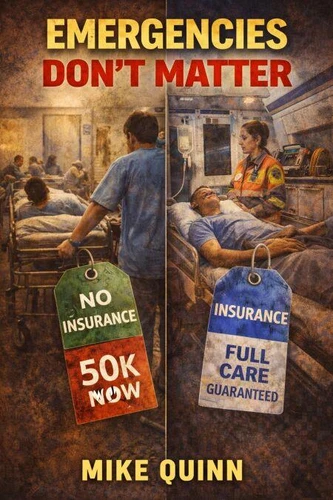
Emergencies Don't Matter. MONEY AND COST MYTHS, #1
Par :Formats :
Disponible dans votre compte client Decitre ou Furet du Nord dès validation de votre commande. Le format ePub est :
- Compatible avec une lecture sur My Vivlio (smartphone, tablette, ordinateur)
- Compatible avec une lecture sur liseuses Vivlio
- Pour les liseuses autres que Vivlio, vous devez utiliser le logiciel Adobe Digital Edition. Non compatible avec la lecture sur les liseuses Kindle, Remarkable et Sony
 , qui est-ce ?
Notre partenaire de plateforme de lecture numérique où vous retrouverez l'ensemble de vos ebooks gratuitement
Pour en savoir plus sur nos ebooks, consultez notre aide en ligne ici
C'est si simple ! Lisez votre ebook avec l'app Vivlio sur votre tablette, mobile ou ordinateur :

- FormatePub
- ISBN8224871650
- EAN9798224871650
- Date de parution20/02/2026
- Protection num.pas de protection
- Infos supplémentairesepub
- ÉditeurDraft2Digital
Résumé
Most relocation advice about the Philippines focuses on attraction: low costs, warm weather, friendly people, relaxed lifestyle. Those elements are real. They draw thousands of foreigners every year. But attraction is only half of reality. The other half is exposure - and that half is rarely explained clearly. Living in another country changes your risk profile. Systems operate differently. Infrastructure behaves differently.
Legal protections shift. Support networks thin out. Everyday life can feel affordable and comfortable while underlying vulnerabilities quietly increase. When unexpected events occur, foreigners often discover that the safety assumptions they carried from home no longer apply in the same way. This book exists to correct a common illusion: that emergencies, disruptions, and risk factors somehow matter less in a lower-cost environment.
They do not. They simply appear in different forms. Medical payments may be required upfront. Infrastructure failures may last longer. Bureaucratic processes may be slower. Financial buffers may erode faster when income or exchange rates change. None of this makes the Philippines unsafe or unsuitable. Millions of people live here successfully. But successful relocation depends on realistic expectations, not romantic assumptions.
Preparedness, not optimism alone, determines stability. The chapters that follow are not warnings against living abroad. They are clarifications about what risk actually looks like once you do. Understanding these realities allows foreigners to plan properly, protect themselves financially, and respond calmly when difficulties arise. When relocation is grounded in reality rather than fantasy, the experience becomes far more resilient.
And resilience, not illusion, is what allows long-term life abroad to work.
Legal protections shift. Support networks thin out. Everyday life can feel affordable and comfortable while underlying vulnerabilities quietly increase. When unexpected events occur, foreigners often discover that the safety assumptions they carried from home no longer apply in the same way. This book exists to correct a common illusion: that emergencies, disruptions, and risk factors somehow matter less in a lower-cost environment.
They do not. They simply appear in different forms. Medical payments may be required upfront. Infrastructure failures may last longer. Bureaucratic processes may be slower. Financial buffers may erode faster when income or exchange rates change. None of this makes the Philippines unsafe or unsuitable. Millions of people live here successfully. But successful relocation depends on realistic expectations, not romantic assumptions.
Preparedness, not optimism alone, determines stability. The chapters that follow are not warnings against living abroad. They are clarifications about what risk actually looks like once you do. Understanding these realities allows foreigners to plan properly, protect themselves financially, and respond calmly when difficulties arise. When relocation is grounded in reality rather than fantasy, the experience becomes far more resilient.
And resilience, not illusion, is what allows long-term life abroad to work.
A propos de Mike Quinn

2,99 €

2,99 €
2,99 €