Selene Rothwell is a nonfiction author known for writing thoughtful books on psychology, relationships, and emotional well-being. Her reflective style blends modern research with compassionate storytelling, helping readers navigate personal growth and life's uncertainties with greater clarity and resilience.
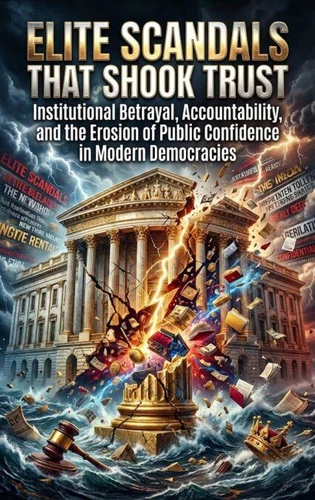
Elite Scandals That Shook Trust. Institutional Betrayal, Accountability, and the Erosion of Public Confidence in Modern Democracies
Par :Formats :
Disponible dans votre compte client Decitre ou Furet du Nord dès validation de votre commande. Le format ePub est :
- Compatible avec une lecture sur My Vivlio (smartphone, tablette, ordinateur)
- Compatible avec une lecture sur liseuses Vivlio
- Pour les liseuses autres que Vivlio, vous devez utiliser le logiciel Adobe Digital Edition. Non compatible avec la lecture sur les liseuses Kindle, Remarkable et Sony
 , qui est-ce ?
Notre partenaire de plateforme de lecture numérique où vous retrouverez l'ensemble de vos ebooks gratuitement
Pour en savoir plus sur nos ebooks, consultez notre aide en ligne ici
C'est si simple ! Lisez votre ebook avec l'app Vivlio sur votre tablette, mobile ou ordinateur :

- Nombre de pages170
- FormatePub
- ISBN978-3-565-27249-5
- EAN9783565272495
- Date de parution25/02/2026
- Protection num.pas de protection
- Taille2 Mo
- Infos supplémentairesepub
- ÉditeurEmphaloz Publishing House
Résumé
Trust in institutions is not lost in a single moment. It erodes through accumulated revelations - each scandal exposing not just individual misconduct but the systemic arrangements that enabled it, concealed it, and for years allowed it to continue unchallenged.
This book examines the landmark scandals that fundamentally altered public confidence in political, financial, and social institutions across the twentieth and twenty-first centuries.
From banking collapses engineered by regulatory capture to political corruption networks spanning multiple governments, from intelligence agency overreach to the organized protection of powerful abusers, each case is treated not as isolated wrongdoing but as a window into the institutional architecture that made betrayal possible. Drawing on parliamentary inquiry records, leaked documents, investigative journalism archives, and the testimony of whistleblowers, the book traces the patterns that recur across vastly different contexts: the concentration of power without accountability, the suppression of internal dissent, the capture of oversight bodies by the interests they were designed to regulate.
It examines not only how scandals unfolded but why exposure so rarely produced lasting structural reform - and what that failure reveals about the relationship between elite networks and democratic governance. For readers seeking to understand how trust is built, weaponized, and ultimately broken at the highest levels of modern societies, this book offers a rigorous, evidence-grounded account of power operating beyond its legitimate boundaries.
From banking collapses engineered by regulatory capture to political corruption networks spanning multiple governments, from intelligence agency overreach to the organized protection of powerful abusers, each case is treated not as isolated wrongdoing but as a window into the institutional architecture that made betrayal possible. Drawing on parliamentary inquiry records, leaked documents, investigative journalism archives, and the testimony of whistleblowers, the book traces the patterns that recur across vastly different contexts: the concentration of power without accountability, the suppression of internal dissent, the capture of oversight bodies by the interests they were designed to regulate.
It examines not only how scandals unfolded but why exposure so rarely produced lasting structural reform - and what that failure reveals about the relationship between elite networks and democratic governance. For readers seeking to understand how trust is built, weaponized, and ultimately broken at the highest levels of modern societies, this book offers a rigorous, evidence-grounded account of power operating beyond its legitimate boundaries.