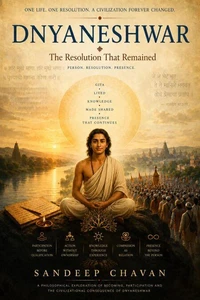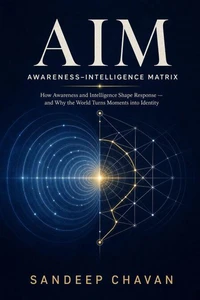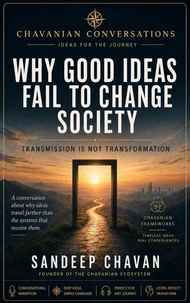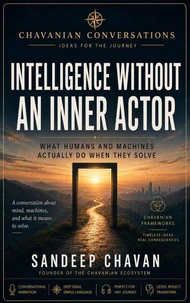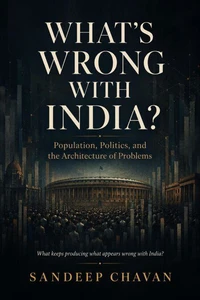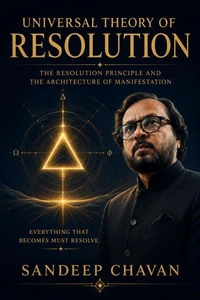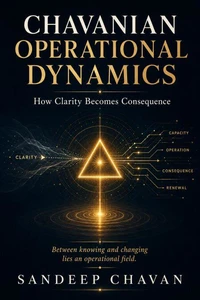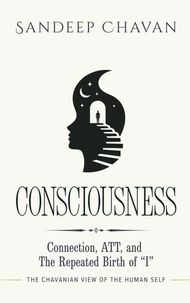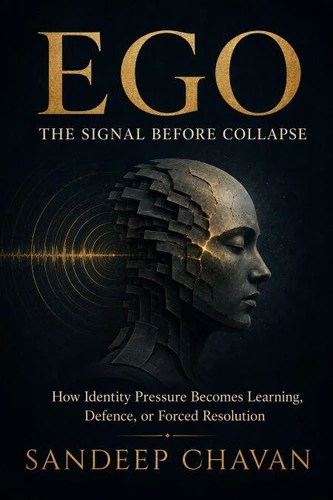



Sandeep J. Chavan is an independent researcher, system thinker, and prolific author whose work spans physics, philosophy, psychology, artificial intelligence, and civilization studies. His writing forms a unified intellectual framework known as the Chavanian Ecosystem-a continuously evolving body of work that seeks to understand reality through the principles of energy, intelligence, consequence, and alignment.
With a background in physics and years of teaching experience, Sandeep approaches complex subjects with clarity and structural depth. His work challenges conventional assumptions across disciplines, offering alternative perspectives on topics such as the nature of energy, the structure of the mind, the role of consciousness, and the future of human systems in an AI-driven world. At the core of his research lies Universal Energy Dynamics (UED)-a consequence-based framework that reinterprets physical, biological, and social systems as interconnected processes rather than isolated entities.
Through this lens, his books explore everything from cosmology and quantum theory to human behavior, decision-making, and global dynamics. Unlike traditional academic or self-help approaches, Sandeep's work operates across domains. His books are not isolated topics but interconnected explorations that collectively build a broader understanding of reality and human existence. This cross-disciplinary approach allows readers to connect scientific reasoning with everyday life, philosophy with action, and theory with experience.
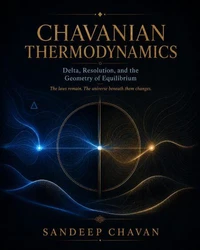
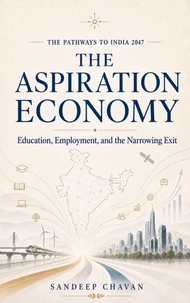
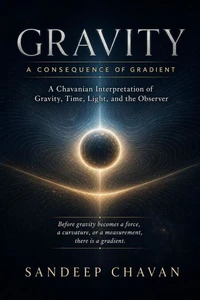
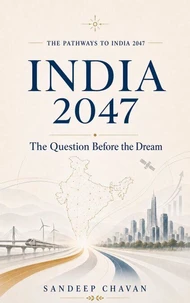
His catalogue includes works on physics and cosmology, consciousness and the mind, human psychology, artificial intelligence, geopolitics, and narrative thought experiments. Each book stands independently while contributing to a larger, coherent framework. Sandeep's writing is characterized by clarity, structural thinking, and a consistent focus on simplifying complex ideas without diluting their depth.
His goal is not to promote belief systems, but to encourage understanding-helping readers see reality more clearly and navigate life with awareness and alignment. Through the Chavanian Ecosystem, he continues to build a living library of ideas that evolves with observation, inquiry, and dialogue.
With a background in physics and years of teaching experience, Sandeep approaches complex subjects with clarity and structural depth. His work challenges conventional assumptions across disciplines, offering alternative perspectives on topics such as the nature of energy, the structure of the mind, the role of consciousness, and the future of human systems in an AI-driven world. At the core of his research lies Universal Energy Dynamics (UED)-a consequence-based framework that reinterprets physical, biological, and social systems as interconnected processes rather than isolated entities.
Through this lens, his books explore everything from cosmology and quantum theory to human behavior, decision-making, and global dynamics. Unlike traditional academic or self-help approaches, Sandeep's work operates across domains. His books are not isolated topics but interconnected explorations that collectively build a broader understanding of reality and human existence. This cross-disciplinary approach allows readers to connect scientific reasoning with everyday life, philosophy with action, and theory with experience.
His catalogue includes works on physics and cosmology, consciousness and the mind, human psychology, artificial intelligence, geopolitics, and narrative thought experiments. Each book stands independently while contributing to a larger, coherent framework. Sandeep's writing is characterized by clarity, structural thinking, and a consistent focus on simplifying complex ideas without diluting their depth.
His goal is not to promote belief systems, but to encourage understanding-helping readers see reality more clearly and navigate life with awareness and alignment. Through the Chavanian Ecosystem, he continues to build a living library of ideas that evolves with observation, inquiry, and dialogue.