
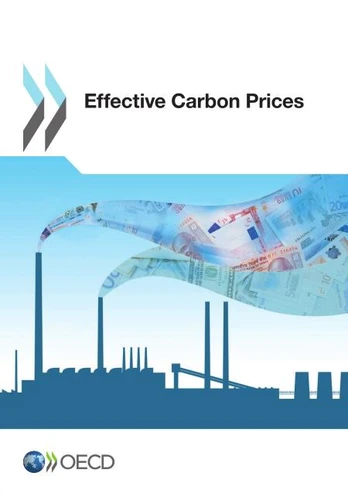
Effective Carbon Prices
Par :Formats :
Disponible dans votre compte client Decitre ou Furet du Nord dès validation de votre commande. Le format PDF est :
- Compatible avec une lecture sur My Vivlio (smartphone, tablette, ordinateur)
- Compatible avec une lecture sur liseuses Vivlio
- Pour les liseuses autres que Vivlio, vous devez utiliser le logiciel Adobe Digital Edition. Non compatible avec la lecture sur les liseuses Kindle, Remarkable et Sony
 , qui est-ce ?
Notre partenaire de plateforme de lecture numérique où vous retrouverez l'ensemble de vos ebooks gratuitement
Pour en savoir plus sur nos ebooks, consultez notre aide en ligne ici
C'est si simple ! Lisez votre ebook avec l'app Vivlio sur votre tablette, mobile ou ordinateur :

- Nombre de pages100
- FormatPDF
- ISBN978-92-64-19696-4
- EAN9789264196964
- Date de parution04/11/2013
- Protection num.Digital Watermarking
- Taille5 Mo
- Infos supplémentairespdf
- ÉditeurOECD
Résumé
Economic textbooks predict that taxes and emission trading systems are the cheapest way for societies to reduce emissions of CO2. This book shows that this is also the case in the real world. It estimates the costs to society of reducing CO2 emissions in 15 countries using a broad range of policy instruments in 5 of the sectors that generate most emissions: electricity generation, road transport, pulp & paper and cement, as well as households' domestic energy use.
It finds wide variations in the costs of abating each tonne of CO2 within and among countries, as well as in the sectors examined and across different types of policy instruments. Market-based approaches like taxes and trading systems consistently reduced CO2 at a lower cost than other instruments. Capital subsidies and feed-in tariffs were among the most expensive ways of reducing emissions.
It finds wide variations in the costs of abating each tonne of CO2 within and among countries, as well as in the sectors examined and across different types of policy instruments. Market-based approaches like taxes and trading systems consistently reduced CO2 at a lower cost than other instruments. Capital subsidies and feed-in tariffs were among the most expensive ways of reducing emissions.
A propos de OCDE


32,99 €

72,99 €

33,99 €

32,99 €
32,99 €

32,00 €

25,00 €

Tax compilance by design
E-book
16,00 €

16,00 €

19,00 €

16,00 €


23,00 €

Women in business 2014
E-book
31,00 €


27,00 €