Sofia Lane is a nonfiction author known for writing thoughtful books on emotional resilience, self-growth, modern relationships, and finding meaning in everyday life. Her calm and reflective writing style combines psychology, philosophy, and practical insight to help readers navigate life with greater clarity, balance, and self-awareness.
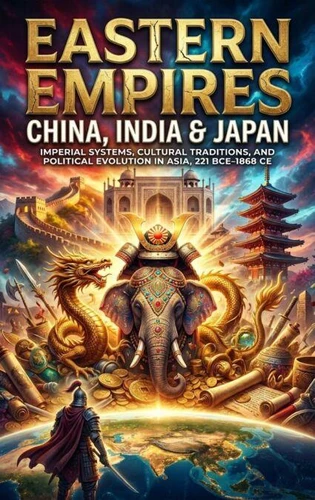
Eastern Empires: China, India & Japan. Imperial Systems, Cultural Traditions, and Political Evolution in Asia, 221 BCE-1868 CE
Par :Formats :
Disponible dans votre compte client Decitre ou Furet du Nord dès validation de votre commande. Le format ePub est :
- Compatible avec une lecture sur My Vivlio (smartphone, tablette, ordinateur)
- Compatible avec une lecture sur liseuses Vivlio
- Pour les liseuses autres que Vivlio, vous devez utiliser le logiciel Adobe Digital Edition. Non compatible avec la lecture sur les liseuses Kindle, Remarkable et Sony
 , qui est-ce ?
Notre partenaire de plateforme de lecture numérique où vous retrouverez l'ensemble de vos ebooks gratuitement
Pour en savoir plus sur nos ebooks, consultez notre aide en ligne ici
C'est si simple ! Lisez votre ebook avec l'app Vivlio sur votre tablette, mobile ou ordinateur :

- Nombre de pages226
- FormatePub
- ISBN978-3-565-25096-7
- EAN9783565250967
- Date de parution16/02/2026
- Protection num.pas de protection
- Taille2 Mo
- Infos supplémentairesepub
- ÉditeurEmphaloz Publishing House
Résumé
Three distinct civilizations-China, India, and Japan-developed sophisticated imperial systems that governed vast populations, generated enduring cultural traditions, and created administrative innovations that shaped Asian history for millennia. This comparative history examines how each society constructed centralized authority, balanced regional diversity with unified governance, and navigated cycles of consolidation and fragmentation.
Drawing on dynastic histories, administrative records, archaeological evidence, and literary sources, the narrative traces imperial evolution across two thousand years.
China's Qin Dynasty established bureaucratic centralization and standardization that successive dynasties refined-Han Confucian governance, Tang cosmopolitanism, Song commercial sophistication, Ming maritime expeditions, Qing territorial expansion. The examination system recruited officials based on merit, creating a scholar-gentry class that administered empire through Confucian principles. India's political landscape differed fundamentally.
The Mauryan Empire briefly unified the subcontinent, but subsequent centuries saw regional kingdoms, the Gupta golden age, and Islamic sultanates before Mughal emperors created syncretic administration blending Persian, Islamic, and Hindu traditions. Caste systems structured society alongside diverse religious traditions. Decentralized power characterized governance more than monolithic imperial control. Japan's imperial system evolved distinctly.
Early centralization attempts borrowed Chinese models, but feudal fragmentation transferred real authority to military rulers. The shogunate system maintained nominal imperial legitimacy while samurai clans wielded actual power. Island geography enabled cultural borrowing while preserving distinct identity. The Tokugawa period enforced isolation, creating stable governance through rigid social hierarchies.
China's Qin Dynasty established bureaucratic centralization and standardization that successive dynasties refined-Han Confucian governance, Tang cosmopolitanism, Song commercial sophistication, Ming maritime expeditions, Qing territorial expansion. The examination system recruited officials based on merit, creating a scholar-gentry class that administered empire through Confucian principles. India's political landscape differed fundamentally.
The Mauryan Empire briefly unified the subcontinent, but subsequent centuries saw regional kingdoms, the Gupta golden age, and Islamic sultanates before Mughal emperors created syncretic administration blending Persian, Islamic, and Hindu traditions. Caste systems structured society alongside diverse religious traditions. Decentralized power characterized governance more than monolithic imperial control. Japan's imperial system evolved distinctly.
Early centralization attempts borrowed Chinese models, but feudal fragmentation transferred real authority to military rulers. The shogunate system maintained nominal imperial legitimacy while samurai clans wielded actual power. Island geography enabled cultural borrowing while preserving distinct identity. The Tokugawa period enforced isolation, creating stable governance through rigid social hierarchies.
A propos de Sofia Lane

4,49 €