A tech pioneer who balanced profit with principles in volatile markets, delivering self-help ethics training, business strategies for sustainable ventures, and histories of tech policy battles.
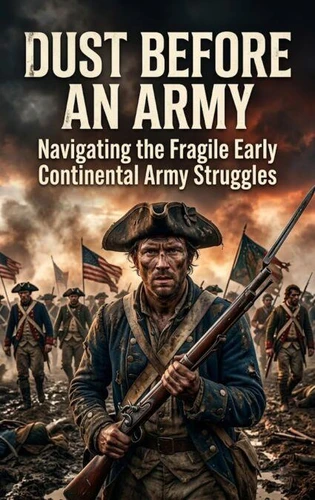
Dust Before an Army. Navigating the Fragile Early Continental Army Struggles
Par :Formats :
Disponible dans votre compte client Decitre ou Furet du Nord dès validation de votre commande. Le format ePub est :
- Compatible avec une lecture sur My Vivlio (smartphone, tablette, ordinateur)
- Compatible avec une lecture sur liseuses Vivlio
- Pour les liseuses autres que Vivlio, vous devez utiliser le logiciel Adobe Digital Edition. Non compatible avec la lecture sur les liseuses Kindle, Remarkable et Sony
 , qui est-ce ?
Notre partenaire de plateforme de lecture numérique où vous retrouverez l'ensemble de vos ebooks gratuitement
Pour en savoir plus sur nos ebooks, consultez notre aide en ligne ici
C'est si simple ! Lisez votre ebook avec l'app Vivlio sur votre tablette, mobile ou ordinateur :

- Nombre de pages189
- FormatePub
- ISBN978-3-565-40679-1
- EAN9783565406791
- Date de parution13/04/2026
- Protection num.pas de protection
- Taille1 Mo
- Infos supplémentairesepub
- ÉditeurEmphaloz Publishing House
Résumé
When George Washington arrived at Cambridge, Massachusetts, in July 1775 to take command of the Continental Army, what greeted him was not a fighting force - it was a gathering of farmers, teenage boys, and elected officers who voted on whether to follow orders. Military discipline was virtually nonexistent, most soldiers carried no weapon, and the regiments had assembled with almost none of the supplies required to arm, clothe, or shelter themselves.
Washington's first act was not to plan a battle. It was to count his men - a task that took over a week. The structural crises ran deeper than morale. Enlistments expired with the calendar year: by 31 December 1775, fewer than half of the 20, 000 men authorized by Congress had been recruited for the new army, forcing Washington to call out militia reinforcements to plug the gap. Critical shortages of arms, ammunition, clothing, tents, and food had plagued the army from its first weeks around Boston, driven by inadequate administrative procedures, the failure of credit, a broken transportation system, and the Continental Congress's legal inability to compel states to contribute money or supplies.
Washington wrote to Congress that different regiments were "upon the point of cutting each other's throats" for firewood near their encampments. The army's internal fractures were no less dangerous than the British lines outside. Officers had been chosen by popularity rather than competence, soldiers operated on a democratic spirit that resisted command, and throughout the war the Continental Army suffered no fewer than 56 recorded mutinies.
Discipline, when imposed, walked a knife's edge - too lax and the army dissolved, too harsh and it turned against itself. Washington's ordeal was not simply to defeat the British; it was first to manufacture, from near-nothing, something that resembled an army at all.
Washington's first act was not to plan a battle. It was to count his men - a task that took over a week. The structural crises ran deeper than morale. Enlistments expired with the calendar year: by 31 December 1775, fewer than half of the 20, 000 men authorized by Congress had been recruited for the new army, forcing Washington to call out militia reinforcements to plug the gap. Critical shortages of arms, ammunition, clothing, tents, and food had plagued the army from its first weeks around Boston, driven by inadequate administrative procedures, the failure of credit, a broken transportation system, and the Continental Congress's legal inability to compel states to contribute money or supplies.
Washington wrote to Congress that different regiments were "upon the point of cutting each other's throats" for firewood near their encampments. The army's internal fractures were no less dangerous than the British lines outside. Officers had been chosen by popularity rather than competence, soldiers operated on a democratic spirit that resisted command, and throughout the war the Continental Army suffered no fewer than 56 recorded mutinies.
Discipline, when imposed, walked a knife's edge - too lax and the army dissolved, too harsh and it turned against itself. Washington's ordeal was not simply to defeat the British; it was first to manufacture, from near-nothing, something that resembled an army at all.