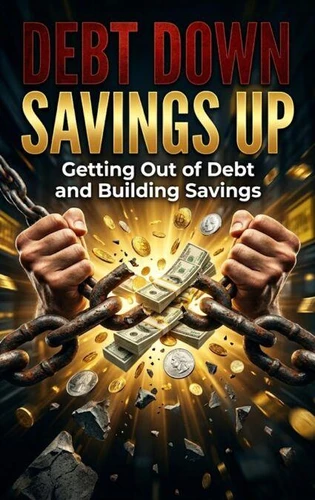
Debt Down, Savings Up. Getting Out of Debt and Building Savings
Par :Formats :
Disponible dans votre compte client Decitre ou Furet du Nord dès validation de votre commande. Le format ePub est :
- Compatible avec une lecture sur My Vivlio (smartphone, tablette, ordinateur)
- Compatible avec une lecture sur liseuses Vivlio
- Pour les liseuses autres que Vivlio, vous devez utiliser le logiciel Adobe Digital Edition. Non compatible avec la lecture sur les liseuses Kindle, Remarkable et Sony
 , qui est-ce ?
Notre partenaire de plateforme de lecture numérique où vous retrouverez l'ensemble de vos ebooks gratuitement
Pour en savoir plus sur nos ebooks, consultez notre aide en ligne ici
C'est si simple ! Lisez votre ebook avec l'app Vivlio sur votre tablette, mobile ou ordinateur :

- Nombre de pages175
- FormatePub
- ISBN978-3-565-40019-5
- EAN9783565400195
- Date de parution10/04/2026
- Protection num.pas de protection
- Taille1 Mo
- Infos supplémentairesepub
- ÉditeurEmphaloz Publishing House
Résumé
The two most foundational acts of personal financial transformation - eliminating debt and building savings - are not sequential goals to be pursued one after the other; they are complementary disciplines to be engineered simultaneously through a coherent, prioritized system. Research consistently demonstrates that individuals who attempt to address debt without simultaneously building even a modest emergency fund are significantly more likely to abandon their repayment plan when an unexpected expense forces them back into borrowing.
The emergency fund is not a savings goal - it is the structural firewall that prevents financial progress from being perpetually reset by life's inevitable surprises. This book examines the proven architecture of parallel debt elimination and savings construction - integrating the debt snowball and debt avalanche methodologies with the emergency fund sequencing frameworks of Fidelity, the 50/30/20 budgeting rule, and the behavioral finance research on financial momentum and commitment consistency.
It explores why sequence matters as much as strategy - why eliminating the smallest debt first generates the psychological momentum that sustains the longer journey, how automating minimum payments removes the decision fatigue that derails consistent progress, and how the deliberate allocation of every freed dollar from retired debts accelerates the compounding trajectory toward savings and investment.
Financial transformation is not a math problem - it is a behavioral design challenge that requires both the right tools and the right sequence of applying them.
The emergency fund is not a savings goal - it is the structural firewall that prevents financial progress from being perpetually reset by life's inevitable surprises. This book examines the proven architecture of parallel debt elimination and savings construction - integrating the debt snowball and debt avalanche methodologies with the emergency fund sequencing frameworks of Fidelity, the 50/30/20 budgeting rule, and the behavioral finance research on financial momentum and commitment consistency.
It explores why sequence matters as much as strategy - why eliminating the smallest debt first generates the psychological momentum that sustains the longer journey, how automating minimum payments removes the decision fatigue that derails consistent progress, and how the deliberate allocation of every freed dollar from retired debts accelerates the compounding trajectory toward savings and investment.
Financial transformation is not a math problem - it is a behavioral design challenge that requires both the right tools and the right sequence of applying them.
A propos de Veda Grant



24,99 €






9,99 €