SOLDES
Jusqu'à -70% sur une sélection d'articles*

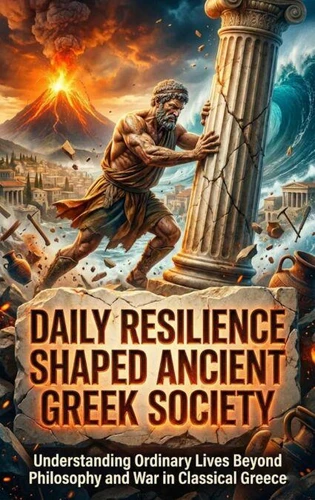
Daily Resilience Shaped Ancient Greek Society. Understanding Ordinary Lives Beyond Philosophy and War in Classical Greece
Par :Formats :
Disponible dans votre compte client Decitre ou Furet du Nord dès validation de votre commande. Le format ePub est :
- Compatible avec une lecture sur My Vivlio (smartphone, tablette, ordinateur)
- Compatible avec une lecture sur liseuses Vivlio
- Pour les liseuses autres que Vivlio, vous devez utiliser le logiciel Adobe Digital Edition. Non compatible avec la lecture sur les liseuses Kindle, Remarkable et Sony
 , qui est-ce ?
Notre partenaire de plateforme de lecture numérique où vous retrouverez l'ensemble de vos ebooks gratuitement
Pour en savoir plus sur nos ebooks, consultez notre aide en ligne ici
C'est si simple ! Lisez votre ebook avec l'app Vivlio sur votre tablette, mobile ou ordinateur :

- Nombre de pages222
- FormatePub
- ISBN978-3-565-20554-7
- EAN9783565205547
- Date de parution28/01/2026
- Protection num.pas de protection
- Taille2 Mo
- Infos supplémentairesepub
- ÉditeurEmphaloz Publishing House
Résumé
Ancient Greece is remembered for democracy, philosophy, and epic battles. Yet this grand narrative overlooks the reality that sustained it: the daily labor of farmers, the economic power of women managing households, the lived experience of enslaved people whose work made civic life possible, and the religious rituals that structured every season.
This book reexamines classical Greek society through archaeological evidence, household documents, and material culture.
It traces how ordinary Greeks navigated drought, debt, and social hierarchy-not as passive subjects of history, but as active participants shaping their world through daily decisions. From food preparation and textile production to religious festivals and neighborhood disputes, the book reveals how social structures actually functioned at ground level. By focusing on the unspoken realities behind the monuments, this work offers a more complete understanding of what ancient Greek society truly was: not just philosophers and warriors, but communities of people working, worrying, celebrating, and surviving together.
It traces how ordinary Greeks navigated drought, debt, and social hierarchy-not as passive subjects of history, but as active participants shaping their world through daily decisions. From food preparation and textile production to religious festivals and neighborhood disputes, the book reveals how social structures actually functioned at ground level. By focusing on the unspoken realities behind the monuments, this work offers a more complete understanding of what ancient Greek society truly was: not just philosophers and warriors, but communities of people working, worrying, celebrating, and surviving together.
A propos de Selene Rothwell















8,49 €