A two-time career changer who navigated industry crashes, developing self-help confidence builders, business frameworks for transitions, and historical narratives of labor migrations.
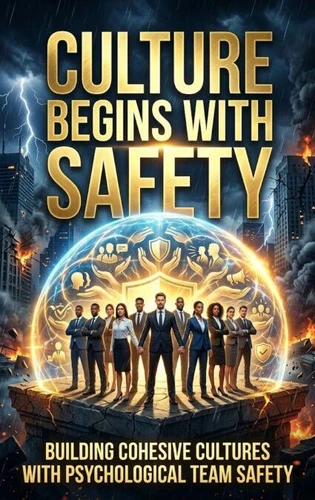
Culture Begins with Safety. Building Cohesive Cultures with Psychological Team Safety
Par :Formats :
Disponible dans votre compte client Decitre ou Furet du Nord dès validation de votre commande. Le format ePub est :
- Compatible avec une lecture sur My Vivlio (smartphone, tablette, ordinateur)
- Compatible avec une lecture sur liseuses Vivlio
- Pour les liseuses autres que Vivlio, vous devez utiliser le logiciel Adobe Digital Edition. Non compatible avec la lecture sur les liseuses Kindle, Remarkable et Sony
 , qui est-ce ?
Notre partenaire de plateforme de lecture numérique où vous retrouverez l'ensemble de vos ebooks gratuitement
Pour en savoir plus sur nos ebooks, consultez notre aide en ligne ici
C'est si simple ! Lisez votre ebook avec l'app Vivlio sur votre tablette, mobile ou ordinateur :

- Nombre de pages195
- FormatePub
- ISBN978-3-565-39995-6
- EAN9783565399956
- Date de parution10/04/2026
- Protection num.pas de protection
- Taille2 Mo
- Infos supplémentairesepub
- ÉditeurEmphaloz Publishing House
Résumé
Team cohesion is not the product of shared meals, off-site retreats, or carefully worded values statements - it is the product of psychological safety: the shared belief among team members that the environment is genuinely safe for interpersonal risk-taking, honest dialogue, and the kind of productive vulnerability that high performance demands. Google's Project Aristotle identified psychological safety as the single most important factor distinguishing high-performing teams from average ones - outranking talent, seniority, and individual skill combined.
When people feel safe, they contribute more fully, challenge ideas more constructively, admit mistakes more readily, and collaborate with the depth and trust that cohesive cultures are built upon. This book examines the leadership disciplines required to build and sustain psychological safety as the foundational architecture of team culture - drawing on Harvard Business School professor Amy Edmondson's four-stage safety model, McKinsey's research on consultative and supportive leadership, and the emerging neuroscience of trust and belonging in organizational settings.
It explores the five core leadership competency domains - social, emotional, communicative, cognitive, and organizational - that research identifies as essential for co-creating psychologically safe environments through daily leader-employee interactions. Psychological safety is not a structural policy - it is a relationally constructed climate, built or eroded through every conversation a leader chooses to have or avoid.
When people feel safe, they contribute more fully, challenge ideas more constructively, admit mistakes more readily, and collaborate with the depth and trust that cohesive cultures are built upon. This book examines the leadership disciplines required to build and sustain psychological safety as the foundational architecture of team culture - drawing on Harvard Business School professor Amy Edmondson's four-stage safety model, McKinsey's research on consultative and supportive leadership, and the emerging neuroscience of trust and belonging in organizational settings.
It explores the five core leadership competency domains - social, emotional, communicative, cognitive, and organizational - that research identifies as essential for co-creating psychologically safe environments through daily leader-employee interactions. Psychological safety is not a structural policy - it is a relationally constructed climate, built or eroded through every conversation a leader chooses to have or avoid.
A propos de Garrett Nolan

9,99 €