SOLDES
Jusqu'à -70% sur une sélection d'articles*

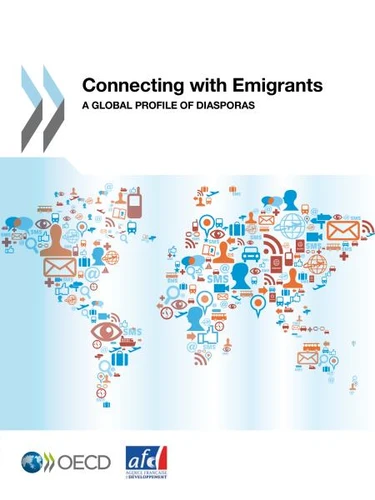
Connecting with emigrants - a global profile of diasporas
Par :Formats :
Disponible dans votre compte client Decitre ou Furet du Nord dès validation de votre commande. Le format PDF est :
- Compatible avec une lecture sur My Vivlio (smartphone, tablette, ordinateur)
- Compatible avec une lecture sur liseuses Vivlio
- Pour les liseuses autres que Vivlio, vous devez utiliser le logiciel Adobe Digital Edition. Non compatible avec la lecture sur les liseuses Kindle, Remarkable et Sony
 , qui est-ce ?
Notre partenaire de plateforme de lecture numérique où vous retrouverez l'ensemble de vos ebooks gratuitement
Pour en savoir plus sur nos ebooks, consultez notre aide en ligne ici
C'est si simple ! Lisez votre ebook avec l'app Vivlio sur votre tablette, mobile ou ordinateur :

- Nombre de pages380
- FormatPDF
- ISBN978-92-64-17794-9
- EAN9789264177949
- Date de parution05/10/2012
- Protection num.Digital Watermarking
- Taille5 Mo
- Infos supplémentairespdf
- ÉditeurOECD
Résumé
The potential of diasporas as a source of economic and social development in origin countries and whether diasporas could help foster development depend on their characteristics, such as size, composition, skill levels and degree of concentration, but also on the degree of integration into the destination countries and the economic, political and social environment in origin countries. Governments of origin and destination countries can indeed facilitate the involvement of diasporas, by supporting networks, by facilitating communication channels with the country of origin, by creating an enabling environment, or - more directly - by easing skill mobility and use.
In this regard, the capacity to characterise the profile of diasporas is instrumental. This joint OECD/AFD publication includes 140 country notes summarising diaspora sizes, including the number of children of migrants born in the destination countries; the characteristics of emigrant populations (gender, age, education, labour market outcomes); the numbers and main destinations of international students; recent migrant flows to OECD countries; and information on the desire to emigrate of different population groups.
The country note information is grouped into six regions: Asia and Oceania; Latin America and the Caribbean; OECD countries; Non-OECD Europe and Central Asia; Middle East and North Africa; and Sub-Saharan Africa. The situation in each region is introduced by a separate chapter, which looks at historical migration trends, the main characteristics of diasporas originating from the region, and likely future developments and challenges.
In this regard, the capacity to characterise the profile of diasporas is instrumental. This joint OECD/AFD publication includes 140 country notes summarising diaspora sizes, including the number of children of migrants born in the destination countries; the characteristics of emigrant populations (gender, age, education, labour market outcomes); the numbers and main destinations of international students; recent migrant flows to OECD countries; and information on the desire to emigrate of different population groups.
The country note information is grouped into six regions: Asia and Oceania; Latin America and the Caribbean; OECD countries; Non-OECD Europe and Central Asia; Middle East and North Africa; and Sub-Saharan Africa. The situation in each region is introduced by a separate chapter, which looks at historical migration trends, the main characteristics of diasporas originating from the region, and likely future developments and challenges.
A propos de OCDE


32,99 €

72,99 €

33,99 €

32,99 €
32,99 €

32,00 €

Tax compilance by design
E-book
16,00 €

16,00 €

19,00 €

16,00 €

25,00 €


23,00 €

Women in business 2014
E-book
31,00 €

