Talia Westcott is a nonfiction author who writes about modern culture, identity, and personal development. Her work combines reflective storytelling with practical insight, exploring how people adapt, grow, and find meaning in a fast-changing world.
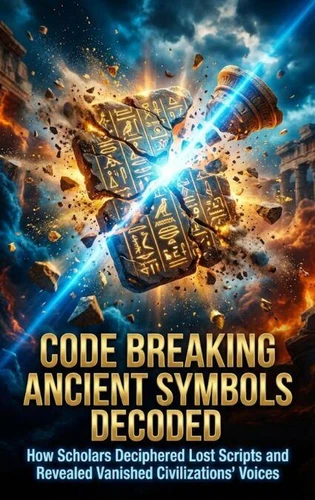
Code Breaking: Ancient Symbols Decoded. How Scholars Deciphered Lost Scripts and Revealed Vanished Civilizations' Voices
Par :Formats :
Disponible dans votre compte client Decitre ou Furet du Nord dès validation de votre commande. Le format ePub est :
- Compatible avec une lecture sur My Vivlio (smartphone, tablette, ordinateur)
- Compatible avec une lecture sur liseuses Vivlio
- Pour les liseuses autres que Vivlio, vous devez utiliser le logiciel Adobe Digital Edition. Non compatible avec la lecture sur les liseuses Kindle, Remarkable et Sony
 , qui est-ce ?
Notre partenaire de plateforme de lecture numérique où vous retrouverez l'ensemble de vos ebooks gratuitement
Pour en savoir plus sur nos ebooks, consultez notre aide en ligne ici
C'est si simple ! Lisez votre ebook avec l'app Vivlio sur votre tablette, mobile ou ordinateur :

- Nombre de pages169
- FormatePub
- ISBN978-3-565-25380-7
- EAN9783565253807
- Date de parution17/02/2026
- Protection num.pas de protection
- Taille2 Mo
- Infos supplémentairesepub
- ÉditeurEmphaloz Publishing House
Résumé
The decipherment of ancient writing systems represents intellectual breakthroughs that transformed archaeological finds into historical testimony, giving voice to civilizations silent for millennia. This exploration examines major decipherment achievements-from Egyptian hieroglyphs to Linear B, from Maya glyphs to cuneiform-using scholarly correspondence, breakthrough discoveries, and methodological analyses to reconstruct how patient research unlocked languages no living person could read.
Through the Rosetta Stone's trilingual key, Jean-François Champollion cracked Egyptian hieroglyphs after decades of false starts by predecessors.
Michael Ventris revealed Linear B as Greek centuries before scholars expected alphabetic writing in the Aegean. Yuri Knorozov demonstrated Maya glyphs were phonetic despite entrenched scholarly resistance. Henry Rawlinson's copying of the Behistun inscription enabled cuneiform decipherment that opened Mesopotamian history. Documentary evidence-decipherment notebooks, scholarly debates, incremental publications, verification processes-reveals the painstaking detective work behind breakthroughs often misrepresented as sudden inspiration.
Each decipherment required identifying script types, finding bilingual texts, recognizing phonetic versus logographic elements, and systematic testing of hypotheses against expanding textual corpora. Each case study examines specific challenges and breakthrough methodologies. Understand how different script types demanded different approaches, how scholarly preconceptions hindered progress, how collaboration and competition both accelerated research, and how decipherment transformed static archaeological artifacts into dynamic historical sources that continue yielding new insights as scholars refine translation techniques.
Michael Ventris revealed Linear B as Greek centuries before scholars expected alphabetic writing in the Aegean. Yuri Knorozov demonstrated Maya glyphs were phonetic despite entrenched scholarly resistance. Henry Rawlinson's copying of the Behistun inscription enabled cuneiform decipherment that opened Mesopotamian history. Documentary evidence-decipherment notebooks, scholarly debates, incremental publications, verification processes-reveals the painstaking detective work behind breakthroughs often misrepresented as sudden inspiration.
Each decipherment required identifying script types, finding bilingual texts, recognizing phonetic versus logographic elements, and systematic testing of hypotheses against expanding textual corpora. Each case study examines specific challenges and breakthrough methodologies. Understand how different script types demanded different approaches, how scholarly preconceptions hindered progress, how collaboration and competition both accelerated research, and how decipherment transformed static archaeological artifacts into dynamic historical sources that continue yielding new insights as scholars refine translation techniques.