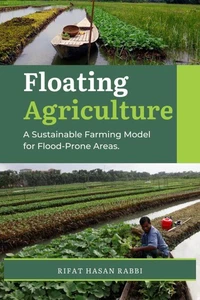
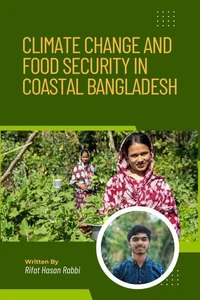
Coastal Bangladesh stands at the frontline of climate change, where rising sea levels, increasing soil salinity, cyclones, floods, and water scarcity are reshaping agricultural livelihoods. Millions of smallholder farmers depend on this fragile agro-ecological zone, yet conventional farming practices are no longer sufficient to cope with growing climate risks. This eBook presents a comprehensive and practical exploration of Climate-Smart Agriculture (CSA) as a pathway to resilience, sustainability, and food security in coastal Bangladesh.
Drawing on scientific research, field evidence, indigenous knowledge, and real-world case studies, the book explains how climate change affects coastal farming systems and examines proven adaptation strategies tailored to local conditions. It covers key challenges such as soil salinity intrusion, sea-level rise, cyclones, waterlogging, and drought, while offering practical solutions including salt-tolerant crop varieties, floating agriculture, raised-bed and Sorjan systems, rainwater harvesting, conservation agriculture, and integrated crop-livestock-fish farming.
The book also highlights the role of technology, digital extension services, early warning systems, and national policies in supporting climate-resilient agriculture. Special emphasis is placed on farmer-friendly practices that are economically viable, environmentally sustainable, and adaptable for smallholders. Policy gaps, institutional constraints, and adoption challenges are critically discussed, followed by actionable recommendations for farmers, researchers, extension workers, NGOs, and policymakers.
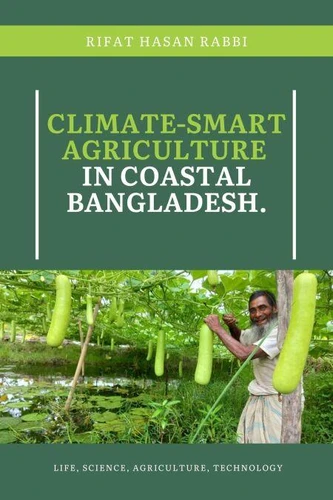
Written in a clear and accessible style, this eBook serves as a valuable resource for agriculture students, researchers, development practitioners, policymakers, and anyone interested in sustainable agriculture and climate adaptation. Climate-Smart Agriculture in Coastal Bangladesh demonstrates that, despite severe climate pressures, resilient and productive agricultural systems are achievable through informed choices, innovation, and collective action.
Coastal Bangladesh stands at the frontline of climate change, where rising sea levels, increasing soil salinity, cyclones, floods, and water scarcity are reshaping agricultural livelihoods. Millions of smallholder farmers depend on this fragile agro-ecological zone, yet conventional farming practices are no longer sufficient to cope with growing climate risks. This eBook presents a comprehensive and practical exploration of Climate-Smart Agriculture (CSA) as a pathway to resilience, sustainability, and food security in coastal Bangladesh.
Drawing on scientific research, field evidence, indigenous knowledge, and real-world case studies, the book explains how climate change affects coastal farming systems and examines proven adaptation strategies tailored to local conditions. It covers key challenges such as soil salinity intrusion, sea-level rise, cyclones, waterlogging, and drought, while offering practical solutions including salt-tolerant crop varieties, floating agriculture, raised-bed and Sorjan systems, rainwater harvesting, conservation agriculture, and integrated crop-livestock-fish farming.
The book also highlights the role of technology, digital extension services, early warning systems, and national policies in supporting climate-resilient agriculture. Special emphasis is placed on farmer-friendly practices that are economically viable, environmentally sustainable, and adaptable for smallholders. Policy gaps, institutional constraints, and adoption challenges are critically discussed, followed by actionable recommendations for farmers, researchers, extension workers, NGOs, and policymakers.
Written in a clear and accessible style, this eBook serves as a valuable resource for agriculture students, researchers, development practitioners, policymakers, and anyone interested in sustainable agriculture and climate adaptation. Climate-Smart Agriculture in Coastal Bangladesh demonstrates that, despite severe climate pressures, resilient and productive agricultural systems are achievable through informed choices, innovation, and collective action.

 , qui est-ce ?