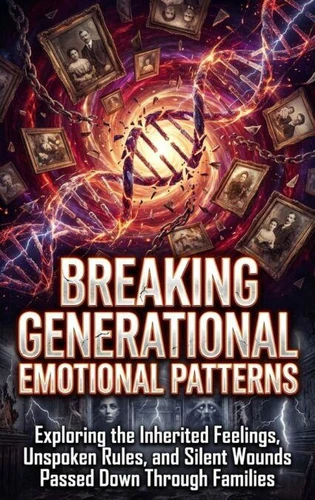
Breaking Generational Emotional Patterns. Exploring the Inherited Feelings, Unspoken Rules, and Silent Wounds Passed Down Through Families
Par :Formats :
Disponible dans votre compte client Decitre ou Furet du Nord dès validation de votre commande. Le format ePub est :
- Compatible avec une lecture sur My Vivlio (smartphone, tablette, ordinateur)
- Compatible avec une lecture sur liseuses Vivlio
- Pour les liseuses autres que Vivlio, vous devez utiliser le logiciel Adobe Digital Edition. Non compatible avec la lecture sur les liseuses Kindle, Remarkable et Sony
 , qui est-ce ?
Notre partenaire de plateforme de lecture numérique où vous retrouverez l'ensemble de vos ebooks gratuitement
Pour en savoir plus sur nos ebooks, consultez notre aide en ligne ici
C'est si simple ! Lisez votre ebook avec l'app Vivlio sur votre tablette, mobile ou ordinateur :

- Nombre de pages192
- FormatePub
- ISBN978-3-565-26733-0
- EAN9783565267330
- Date de parution23/02/2026
- Protection num.pas de protection
- Taille2 Mo
- Infos supplémentairesepub
- ÉditeurEmphaloz Publishing House
Résumé
Some of what you feel was never originally yours. The anxiety that arrives without a clear source, the way you shrink in certain moments, the emotional responses that seem disproportionate - these can be echoes of experiences carried silently across generations, passed down not through words but through behavior, atmosphere, and the things no one ever talked about.
This book explores how emotional patterns travel through family lines - how unprocessed grief, unspoken shame, and inherited fear quietly shape the way each generation loves, struggles, and sees itself.
It examines the invisible contracts that form inside families, the emotional roles that get handed down, and the subtle ways children absorb what their parents could not resolve. Rather than framing generational patterns as burdens to overcome, this book offers a compassionate lens for understanding them - not to assign blame across generations, but to develop a clearer awareness of what was absorbed, what was learned, and what belongs to whom. For anyone who has recognized something familiar in their struggles - something that feels older than their own life - this is a thoughtful, honest exploration of how family emotional history lives in the present.
It examines the invisible contracts that form inside families, the emotional roles that get handed down, and the subtle ways children absorb what their parents could not resolve. Rather than framing generational patterns as burdens to overcome, this book offers a compassionate lens for understanding them - not to assign blame across generations, but to develop a clearer awareness of what was absorbed, what was learned, and what belongs to whom. For anyone who has recognized something familiar in their struggles - something that feels older than their own life - this is a thoughtful, honest exploration of how family emotional history lives in the present.