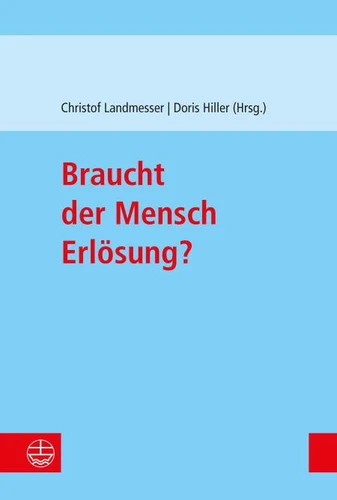
Braucht der Mensch Erlösung?
Par : ,Formats :
Disponible dans votre compte client Decitre ou Furet du Nord dès validation de votre commande. Le format PDF est :
- Compatible avec une lecture sur My Vivlio (smartphone, tablette, ordinateur)
- Compatible avec une lecture sur liseuses Vivlio
- Pour les liseuses autres que Vivlio, vous devez utiliser le logiciel Adobe Digital Edition. Non compatible avec la lecture sur les liseuses Kindle, Remarkable et Sony
 , qui est-ce ?
Notre partenaire de plateforme de lecture numérique où vous retrouverez l'ensemble de vos ebooks gratuitement
Pour en savoir plus sur nos ebooks, consultez notre aide en ligne ici
C'est si simple ! Lisez votre ebook avec l'app Vivlio sur votre tablette, mobile ou ordinateur :

- Nombre de pages136
- FormatPDF
- ISBN978-3-374-06472-4
- EAN9783374064724
- Date de parution03/02/2020
- Protection num.Digital Watermarking
- Taille2 Mo
- Infos supplémentairespdf
- ÉditeurEvangelische Verlagsanstalt
Résumé
Die Frage, ob der Mensch Erlösung braucht, ist für das Christentum zentral. Ein Nein würde sein Ende bedeuten. Darum legt der diskussionsfreudige Band einen Schwerpunkt darauf, die Erlösungsbedürftigkeit des Menschen in seiner ganzen Lebenswirklichkeit aufzuzeigen. Des Weiteren aber bedarf diese Erlösungsbedürftigkeit der Klärung im vielfältigen Beziehungsgeflecht des Menschen zu sich selbst, zu seinen Mitmenschen, zur Welt und zu Gott und ruft darin weitere Fragen auf: Wovon genau und durch wen wird der Mensch erlöst? Auf der Suche nach Antworten wird deutlich, dass Erlösung, die das Leben erschließt, konkret werden muss.
Der Band zur 21.
Jahrestagung der Rudolf-Bultmann-Gesellschaft für Hermeneutische Theologie dokumentiert aus alt- und neutestamtlicher, kirchenhistorischer, systematisch-theologischer, praktisch-theologischer und jüdischer Perspektive Konzepte zur Beantwortung der aufgeworfenen Fragen. Mit Beiträgen von Albrecht Grözinger, Lilian Marx-Stölting, Marianne Grohmann, Eckhart Reinmuth, Volker Leppin und Dorothee Schlenke. [Does Man Need Salvation?] The question of whether a human being needs salvation is central to Christianity.
A "no" would mean his or her end. That is why this volume focuses on demonstrating the need for salvation of the individual in his or her entire reality of life. Furthermore, however, this need for salvation requires clarification in the manifold network of relationships of the human person to himself, to his fellow human beings, to the world and to God, and thus calls for further questions: From what exactly and through whom is man redeemed? When searching for answers, it becomes clear that salvation, which reveals life, must become concrete. The volume on the 21st Annual Conference of the Rudolf Bultmann Society for Hermeneutic Theology documents concepts for answering the questions raised from the perspectives of Old and New Testament, Church history, systematic theology, practical theology and Judaism.
Jahrestagung der Rudolf-Bultmann-Gesellschaft für Hermeneutische Theologie dokumentiert aus alt- und neutestamtlicher, kirchenhistorischer, systematisch-theologischer, praktisch-theologischer und jüdischer Perspektive Konzepte zur Beantwortung der aufgeworfenen Fragen. Mit Beiträgen von Albrecht Grözinger, Lilian Marx-Stölting, Marianne Grohmann, Eckhart Reinmuth, Volker Leppin und Dorothee Schlenke. [Does Man Need Salvation?] The question of whether a human being needs salvation is central to Christianity.
A "no" would mean his or her end. That is why this volume focuses on demonstrating the need for salvation of the individual in his or her entire reality of life. Furthermore, however, this need for salvation requires clarification in the manifold network of relationships of the human person to himself, to his fellow human beings, to the world and to God, and thus calls for further questions: From what exactly and through whom is man redeemed? When searching for answers, it becomes clear that salvation, which reveals life, must become concrete. The volume on the 21st Annual Conference of the Rudolf Bultmann Society for Hermeneutic Theology documents concepts for answering the questions raised from the perspectives of Old and New Testament, Church history, systematic theology, practical theology and Judaism.
A propos de Christof Landmesser

29,99 €